Showing posts with label Marvel. Show all posts

Thursday, August 31, 2017

Me and 1 Million BC (AKA Marvel, that's not how this works)

It might not be super clear in this blog but I’m an archaeologist. This means that at the most basic level I’m interested in what people did in the past and I try to access that by looking at the things that they left behind. (My specific research toes that line but that's another story). If you can stand some strange hours and a lot of learning, it’s a really cool gig. Special note: WE DO NOT INTENTIONALLY LOOK FOR DINOSAURS. If that’s your gig, look into paleontology. Archaeology digs people stuff.

So here’s my beef with Marvel’s 1,000,000 BC, it is on the very edge of making sense but is just one order of magnitude off. You say 100,000 and I’m there. But at 1 million you are in the territory of "do we call what we evolved from people” or "are they still not quite similar enough to us for that".

Yes. I. know. it. is. fiction.

The problem is that in many other ways comics do things that undercut what we know about the human past (Kree involvement to make the inhumans etc.) that this extremely close but not quite right event becomes the last straw and I can't suspend my disbelief. Besides the Inhuman influence, the implications of the 1 million BC arc are so far reaching that in some ways I seriously question if the “regular” humans in the Marvel Universe would even be recognizable to us as regular earth people. On top of that I hate that this timeline actually undercuts human achievement because we came up with the cool shit they are doing/wearing much more recently than 1 million years ago. AKA in less time we came up with the same complex stuff. For me errors like 1 million BC are closer to Ancient Aliens than something I would want people being inspired to do archaeology from because it takes all the cool shit away from people and makes them supernatural. If they had just removed a couple of zeros, let say 10,000 BC, I would have been fine but 1 million (so exactly 1,002,017 years ago), nope cool story Marvel, you're drunk please go home.

What is going with the Earth and our ancestors at 1 million years ago? Well we’re chilling as Homo Erectus, with some possible variation into maybe a few other species maybe just some cousins who are from a distant relative, and making some of the first stone tools, not the first but more advanced stuff. We probably make fire and it’s an ice age. There is nothing like Homo Sapiens for like another 800,000 years give or take. There is no such thing as symbolic culture at least that we have evidence for. Being white doesn’t exist yet and actually is a phenomenon that outside of Neanderthals may not have been common in Homo Sapien Sapien until the last 12,000-8,000 years. Related to this, there probably were not the ethnic separations that would produce the type of “avengers” Marvel is selling as of 1 million BC and also red hair didn't exist yet. So who were these "Avengers"?

Starbrand – The concept of a “Brand” doesn’t exist in the sense of signifying similarity or ownership

Agamotto – Fine basically except for there not being Ethnically Asian people yet

Iron Fist – We have not developed metallurgy enough to smelt iron

Black Panther – Possible except the human evolution hang up explained above

Ghost Rider – Not clear that we had the symbolic capacity to understand an afterlife and hence “ghosts” or if the concept of “riding” something had been invented

Phoenix – We just got around to fire and Phoenixes are associated with Ancient Greece which does not exist yet

Odin – Not human, so of all the Avengers he is actually the only that makes sense in this context because he did not evolve on Earth so doesn’t fall under my critique. The irony abounds.

My annoyance with settings like this are that we know a lot about what happened in the past. We spend a lot of time excavating sites and reconstructing climate and behavior by examining material culture. So to not take those as facts or even consider that as an avenue for consideration is really frustrating. While this is probably something that other scientists regularly get annoyed with, many of those technologies and sciences exist to some degree in the “future” of humanity. They are things that we are moving toward, in some cases, going from science fiction to science fact on the back of scientists interested in creating what was envisioned as part of our future. Unfortunately, that is not the case with historical sciences like archaeology. By remaking the history of the earth, and of human evolution, you are going from science fact to science fiction.

We can’t increase the pace of human evolution just because we wanted to have extra zeros to make our event look more existing. On top of the pace needed to sustain that, there’s also the problem that all of the characters come from what would essentially be complex civilizations that would need to have come about extremely quickly to support the symbolic behaviors, particularly with the mantle-like traditions of Iron Fist and Black Panther. We didn't even farm until 10,000 years ago during something called the Neolithic Revolution.

I also have to address the possible existence of people with the x-gene in 1 million BC. We would all have the x-gene by now, most likely, if people with it started popping up a million years ago. Especially if those were children of, or they were, the people who were smartest, most powerful, and had good reproductive power (all helpful for making sure your descendants continue to live). Most likely, in the absence of too many supervillains, such new “powers” would be highly adaptive and fitting for the unpredictability of the early Pleistocene so those with the X-gene would have definitely taken over the world by now. No Doubt. Also I’m very confused by the weird Starbrand/Hulk thing that is going on. Is It supposed to be Gigantopithecus (which is what Sasquatch might be based off of)?

So why do I even care so much as to write this? Well right now, as the March for Science demonstrated, science is being regularly attacked and under funded. Particularly, anthropological sciences, such as archaeology and paleoanthropology, that teach things like evolution are under attack and are presented as “one of many possible explanations”. And because of that it matters a fucking lot that comics espouse an evolutionary agenda more akin to creationism than evolution, especially when people like to think of comics as science fiction rather than just fiction or fantasy. From a storytelling point of view, it is a disservice to feed the public a thinner fictional world when we have a wealth of knowledge about the realities of prehistory. Particularly when prehistoric life rarely gets the sort of publicity that a Marvel event brings. This could have been a great chance to collaborate and use archaeological knowledge to color a fictional world using the comics art to illustrate a complex prehistory. A chance to do something fun but also use what we have learned about the past to give it a depth that goes beyond prehistoric “cavemen” stereotypes. In the same way I think that comics should be doing better with culture, they should be doing better with science. We know more about science and culture than we did in the 1960s, it's time we did something about it.

Sunday, August 27, 2017

Guardians of the Galaxy Vol. 2 Redux

I really like the Marvel Cinematic Universe’s Guardians of the Galaxy (GOTG). I read the run of the GOTG series written by Brian Michael Bendis leading up to and after the movie (ending at 27 before Secret Wars)and it pales in comparison to the characters set up in the film. Other iterations of the Guardians, before and after that run, have had the same problems and particularly those that came before it fall into the unfortunate trap of so many comics from that era, everything centers around the white male experience, and any character that can’t be coerced into that form basically has no character to speak of.

However, when I originally left the theater after GOTG vol. 2 I had a funny feeling and I couldn’t quite figure out why. I liked the movie but didn’t love it the way I had the first movie. What was it? Was it that I didn’t laugh as much? Was it because of the insulting nature of Drax? Was it that almost everything Gamora said started with a No? Was it the soundtrack? Was I hungry during the film?

I let the movie go for the summer though, letting it settle into the back of my mind and not questioning the hesitant positive feeling I had about the film. So when Clara Mae’s article exploring the misuse and abuse of Mantis in the film came out recently, I knew I couldn’t let that rest any longer. I knew I had to re-watch the film and knowing about the twist, and remembering some other low moments of the film, to try to pinpoint what it was exactly that create such a funny feeling.

Upon re-watching, which I did at a theater so I didn’t tweet through the whole thing, I enjoyed it. It was a good movie with a solid theme that someone on twitter put succinctly, its about living with your family. Obvifously, that’s not a hard theme to pick up on. Everyone has their “travel through the Galaxy” buddy and very rarely do we see any of the characters alone at any point in the film. With the exceptions being some great character shots of Starlord and Gamora.

But the movie falls short of fully developing this idea particularly failing in the humor and in the portrayals of relationships that involve women. Gunn has done a fantastic job dealing with issues of fatherhood. Rocket and Groot, the Daddy triangle of Starlord, Yondu, and Ego; and even Yondu’s relationship with Stakar (Sylvester Stallone’s cameo character) but when it comes to relationship with women of the story, it falls flat.

Mae’s article describes the misuse of Mantis and explores the character in relation to her comics inspiration in more detail than I give here but in general it made me ask the question, what, if anything, is actually funny about the interactions between Drax and Mantis? I think they were trying to go with a sort of “tough love” relationship and I appreciate the idea (not the execution) that Drax has a different conception of beauty than the implied “norm”. (Side note: Personally the apparently common beauty standards, gender categories, and romantic relationships in an infinite galaxy in the MCU and elsewhere gets old and for me feels extremely unimaginative but I digress). There’s a difference between being honest and being rude. Drax even acknowledges that Mantis is naïve and yet continues to insult her. He knows what insults are just because he might not understand metaphor. Also while apparently naïve, Mantis knows what she looks like and what she likes to look at, so it’s very unlikely that she has no conception of what “beauty” is. I do appreciate the idea of having a beautiful soul but it comes at odds with other things that Drax says. He talks about how ugly beings know that they are truly loved because people can’t just enjoy their appearance but at another point talks about how beautiful and attractive his own wife was, who he clearly loved but maybe she didn’t trust him to have done so truly.

Other interactions with Drax, who for some reason carries the majority of the comedic load of this movie, are particularly unfunny. The jokes in the film seem to have devolved from amusing and cute non-sequiturs, such as the “I'm Star Lord Man. Legendary Outlaw” line in the beginning of the first film, to literal poop jokes and extremely predictable physical gags. The consistently mediocre humor dragged down the film. I assume Gunn was trying to link such intimate details, the sort of things you only talk about with family, to establish the relationships that the Guardians have built since the previous film. However, there are other ways to do it especially this isn’t a G rated movie where toddlers are looking for fart jokes to giggle to themselves. Also because there are other moments that execute this idea more clearly and more meaningfully. Peter mention that he told Gamora a drunk story and Rockett’s continued references to wanting to listen to “Peter’s Music”. These details build the relationships without the need for cheap laughs or insults and is the sort of meaningful reliance on family that the movie is trying to portray.

Without the jokes, much of the portrayal of family as theme works really well and there’s a lot of good self reflection on the nature of family and what makes beings bond.

I also have to say that the movie does a pretty great job (and sort of in parallel to but also intersecting with) critiquing the idea of white male exceptionalism and superiority. The fact that an exceptionally powerful being when they conceived of what biological life (in general) would look like, he selected a humanoid white male says a lot. While it may have been unintentional on Gunn's part as the character was created in 1966, it says a lot about who has power and who we imagine as powerful in our culture. But acknowledging something isn’t necessarily a critique Paulina! Yes. That is true. BUT that comes with the fact that the character is named EGO, encompassing the essential nature of the character also as the quintessential non-reflective cis-het-white man. This metaphor can extend to all the other characters in the film too, who by the end of it work together defeating their own egos to be successful in defeating the big Ego. This critique is also confirmed when Peter retorts, “What’s so bad about being like everyone else?” directly confronting the idea of the inherent exceptionalism of white men and then Peter rejecting the idea of being divinely special.

This whole thing is great. However, all of it basically centers on the white male perspective and while a critique, it doesn’t back that up by bolstering its use of their none-white male characters. It is a self-critique of the white male perspective rather than an expansion of that critique in application.

This shortfall is of course most evident in the woman characters. (Side note: Michelle Yeoh is the only women of color in the film who is not in make up.) This comes across as most problematic with the two most prominent woman characters, Mantis and Gamora. Specifically Mantis, literally performs the emotional labor for the team, and Gamora, for most of the film acts as a “no” woman.

Empathy powers are not out of the ordinary for Mantis as a Marvel Character however, it means that she literally embodies performing emotional labor. Her job is emotions, changing other beings emotions or using them to transform her own. The entire final battle, to give time for the rest of the Guardians to come up with a plan to defeat Ego rests on her empathic ability. The scene demonstrates how powerful Mantis’ powers are (though it’s undercut by Drax’s unneeded commentary). But it is the physical embodiment of learning to use her emotions and empathy for the benefit of others at the expense of her physical safety, which is also used for a cheap joke. This is also not given as critique, it is demonstrated as a gift, the thing that makes her special and unique. It doubles down on the idea that the emotions of men come down on the shoulders of women.

Gamora, rather than being sympathetic to Mantis essentially treats her as a non-entity, although they both should have a lot in common considering they both (along with Nebula) were manipulated and enslaved by powerful males. This commonality is not explore of course (though I would also love a Guardians with Nebula, Gamora, Mantis, and Michelle Yeoh) and instead the more prominent role Gamora takes in the film is as another stereotype, the “No” woman. If I’m honest, I love Zoë Saldaña particularly as Gamora but the only Marvel product that’s really done anything to give Gamora a full character is Nicole Perlman’s short-run comic entitled Gamora (WHICH TOOK FOREVER TO COME OUT AND THEN ONLY RAN FIVE ISSUES AND I AM SAAAALLLLLLTTTTYYYYYY about this).

Both movies have some great Gamora moments but she rarely comes across as a full character and often she gets relegated to a slightly more emotive Drax. But I digress, the most unfortunate thing that happens with her character is her status as the “no” woman of the group. She’s the Hillary to the Starlord Bernie, shooting down all the male characters ideas and getting to basically mother the group. It is a valid personality choice if it wasn’t such a goddamned trope for smart and capable women. What is a “now” woman? Well they essentially act as the curb to the grand ideas of men. They are practice, realistic, and rarely seem to have inventive ideas on their own. Generally, and what are then figuring is their conservative, interactions with the inventive, impractical (cis-het-white) male character. Gamora, admittedly isn't always a “no” woman in the film, as she is the whole reason Peter takes a chance with Ego but in that she basically only serves to further the white-cis-het-male plot and up until that point almost every one of her lines begins with a “no” or a negative statement.

Paulina after so many paragraphs of critique how could you say that you actually enjoyed this movie? It has so many problems. Well my dear readers, everything I love this problematic, from my dog to my chosen profession. The film has some excellent points, is lusciously shot, and designed. Baby Groot is fantastically cute and the songs fit well with their associated scenes. Also the points that the movie gets right are fantastic. Also needless to say the portrayal of the Sovereign as the embodiment of “whiteness” upon re-watching is fantastic. Yes a couple of the attendants to the High Priestess are people of color but the majority of them were white, and their entire culture screams stuffy white people especially with all their gold and high and mighty attitude. And of course the super creepy “construction” of perfect individuals and their controlling of their entire world. Anyways it was good but because of the unfortunate single-mindedness of the creation wasn't great. It is a fantastic treatise on white-cis-het-male relationships and critiques them but doesn’t take those to the next level. It remains in that world rather than expanding the repercussions of that critique to impact the agency of the other characters. Assuming we get a vol. 3 and on the results of the Infinity War films, we will probably be exploring the idea of losing or living without one’s family and I hope Gunn brings in another pair of eyes to critique the script based on problems like this to give meaning to the myriad characters that are now part of the Guardians team. Yes, there is a lot we can critique cis-het-white-males for, but the real end results of that should be giving agency to those who are not that and letting their diversity and personalities shine through.

Sunday, May 7, 2017

My thoughts on two-bit Marvel Batman or wait…I mean Iron Fist

There are many ways to start this blog. I could relate it to my experiences growing up mixed race, I could start it talking about the tweet storm that descended every time I watched a minute of Iron Fist, and a million other ways that begin academically/professionally but end up a mire of foaming-at-the-mouth rage. But honestly, Danny’s not worth that sort of time or energy.

Those of you who read this (all four!) will probably recognize these ideas from previous tweets, Facebook posts, and angry/exasperated text messages but I’ve probably spent more time thinking about Danny Rand than the writers did so I thought I should have all of those ideas organized in one place. I will also try to refer to much smarter minds than myself for some of these issues because I am only one person and can’t think of all the ways this was entirely mediocre.

You may be thinking “Paulina, if you hated it so much, why did you finish it?” Well, person who questions my life choices, it started with a podcast I did with the awesome Daniel Kwan at the SAAs in Vancouver. We chatted about everything under the sun regarding diversity and being of Asian heritage, and at one point we started ripping into Iron Fist, which had just come out. Between the two of us, we had seen maybe an episode or two, but we had seen enough to joke about forcing ourselves to watch the whole thing then do another Podcast. I thought, hey sure, I’ll give it a chance even though there are tons of articles coming out about how boring it was etc. [All the hyperlinks]. I also had a morbid interest in actually seeing what was going on because I enjoy the Marvel cinematic/Netflix Universe and Colleen Wing seemed like such a boss.

So, post SAA, but before returning to school the BF and I put the first two episodes on and realized very quickly that there was no way in hell we could get ourselves to finish this on its own. So we decided, let’s pair this with Into the Badlands which we had both heard great things about. I put the first five minutes on and was like “This dude riding on this motorcycle is more interesting than that whole episode of Iron Fist”. From then on, we had a formula, two episodes of Iron Fist to one episode of Into the Badlands.

(NOTE: I would instead recommend just watching Into the Badlands and, if you really need to know, Googling a synopsis of Iron Fist and watching the fight with Lewis Tan. Then maybe re-watch the Defenders trailer to see how many times Jessica Jones sasses Danny because he deserves it.)

So what was so bad about it? Well, almost everything. The casting was unimpressive, the acting was bad, the fight scenes were boring, the overall plot was unclear, the writing was atrocious, and the show did nothing to improve the problematic origins of the character. I’ll try to address my critiques in that order, otherwise I’ll die of an aneurysm. However, honestly, they bleed and crisscross one another so it’s hard to say where one of these critiques ends and the next begins.

Casting: Danny Rand is white in the comics but he’s also supposed to be interesting and capable. For training so much as a monk, he is not that physically impressive and isn’t that good at martial arts. Marvel cannot tell me they could not find a decent-looking blonde, white actor who knew at least some Kung-Fu. There are tons of Caucasian dudes who do Kung-Fu, so, it’s absurd that they went with someone who so minimally fit the visual profile of Danny Rand.

The acting: So the writing is atrocious, which I’ll get to in a second, but Finn Jones doesn’t do much to convince me of anything. He looks like a petulant child when he’s angry, which is about 75% of the time. And his uncontrollable anger/anxiety does not do justice to those who experience such emotions. I’ve seen people go through such episodes and Finn acts them so badly they are borderline comedic, which is not what we want when right now we do so little to support people with mental health problems. Especially coming after Jessica Jones, which did such a great job with that, the poor acting surrounding such issues is truly infuriating.

The fight scenes: So there were a couple good ones, I will give them that. HOWEVER, THE WHOLE POINT OF THE IRON FIST IS MARTIAL ARTS MASTERY. Literally, he was created alongside characters like Shang-Chi, Colleen Wing, and Misty Knight as part of a growing line of martial arts heroes. So, his martial arts should be impeccable. Instead, there is a stiffness whenever Finn Jones executes moves that makes the divide when he fights professionals, like the fight with Lewis Tan, even larger. This makes his entire purpose (master of kung fu) unbelievable and his whole character come off as mediocre. Also, as he’s told us, like five million times, he has been training for 15 years doing Kung-Fu in a place surrounded by Kung-Fu masters who only doing Kung-Fu. Did I mention Kung Fu? (Or that you’d get more students if you taught Kung-Fu even though it’s clearly a Japanese constellation martial arts studio?) HE ALSO DEFEATED A REAL DRAGON TO GET HIS POWERS WITH HIS KUNG FU. Overall, the scenes feel slow when you can actually see people move or they’re cutting between shots so quickly you have no time to actually admire the fighting that’s going on. They also do “cool” but tricksy cinematic shots like stage fights at night or in dimly light areas, meaning they can hide what’s not going well in the fight. This became even more obnoxious when pairing the show with Into the Badlands, whose bread and butter is epic long-cut fight scenes. And to top it off, multiple times in the show he is on the precipice of LOSING, badly, to people who should not be close to his equal.

The overall plot: How did Danny get to New York without a passport or identification? How does he know how to drive an actual car? Why does he still speak American English? Why does he still act white in his physicality? Why was David Wenham’s character even there? What was the point of Davos coming back? What was the point of this season? What did we learn about who Danny is? What did we actually learn about his origin? WHAT IS HE EVEN FIGHTING FOR? Because honestly, I’m not sure and the overall plot seemed to want to be half introduce the Hand, while actually giving us no real information about the Hand except maybe hinting at Bad Davos, and half “PLEASE LIKE DANNY”. But what does Danny fight for? So far as I could tell, he felt like Marvel’s mediocre Batman. His parents are killed, he gets trained in the ways of an Eastern martial arts, comes back and then RETAKES THE COMPANY and gets vengeance?! It’s Batman Begins but boring and, sidenote, Finn Jones is not as hot as Christian Bale. ANYWAYS what is he fighting for? He has no real ties to New York beyond the five people he’s met and honestly being away from 15 years and growing up with monks would probably make places like New York and the whole American system feel extremely cruel. So why stay? And honestly, the way he interacts with his company in New York feels like the most white-people-problems shit I’ve ever seen, it’s like he’s still a child even though clearly Davos, who also is from K’un L’un, can act like an adult and still have a little bit of fish-out-of-water too. Also Thor was a fish-out-of-water and didn’t come across as an annoyingly naïve child.

The writing: “Worst Iron Fist ever.” “This means I have to kill him for you” “But I’m Danny Rand” “I’m Danny Rand” “I’M DANNY RAND” These are the lines I remember from this show. Particularly, because I laughed at all of them. The plot, as mentioned above, was confusing but so often the individual lines were just absurd. They were written stiff, acted stiffly, and did not convey anything that they should have. It’s like, did no one edit the scripts for these episodes? Because they were trash and it’s like, we really know you are Danny Rand, seriously, you can stop saying your name. It’s like he was some sort of Pokemon that got stuck only saying their own name for 13 episodes.

And lastly, but not leastly, the Problematic Origins of the Iron Fist:

Like most superheroes, beyond ye olde white-straight-cis-het-male-American heroes, the origins of Danny Rand and his whole schtick are problematic. Why? Well like Luke Cage and Shang-Chi, he was created at a point in time where comics were written by white-cis-het-male-Americans who had no idea about cultural appropriation and had yet to take the time to examine how their culture was inherently racist. So, these characters, while great for bringing “diversity” into comics, contain horrible stereotypes that modern writers have spent a lot of time fixing. Essentially, if you pick up any Luke Cage comics before 2000, though some may also take issue with the Max CAGE series, you will see a horribly stereotyped essentially racist portrayal of an African American man. The Netflix series dispels most of that, and created a well-rounded solid representation of an African American man, and modern African American culture, and engaged with how his power was a symbol for the ongoing conflict we have in this country between structural violence and the African American body.

Iron Fist? Yeah…No. Full disclosure, I haven’t read much Iron Fist. However, there are tons of articles out there by people who have but I’m going to give my two cents on some of the excuses I have heard about Iron Fist:

“But Danny is white in the comics!”

Yes and so were Elektra and Psylocke originally and they were be played by Asian heritage actors.

“His race doesn’t really matter!”

If his race doesn’t really matter why did you pick a white person? White is not the global average for generic! It’s white and has just as much racial baggage as any other choice. Especially when he had no martial arts background anyways!

“He was supposed to feel like the other”

Where? We don’t see his training in K’un L’un where he is supposedly an “outsider” (like being picked on by all the mean Asian boys) and clearly he was less of an outsider than he claimed if he had the same rights as everyone else at the monastery. Is he an outsider in New York? He sort of is, but that could be done with anyone because that’s personality and not physical perception. Also if it’s about feeling like the "other" any Asian American will tell you that no matter how similar you might look to others in Asia, they know when you aren’t a local. Also we’ve had the white-guy in Asia outsider story told like a Kajillion times before, this isn’t unique (See the Last Samurai).

“There are other Asian superheroes that Marvel can use”

Yes all five of them. There actually is a paucity of well-developed Asian-American heroes in the Marvel universe and they get whitewashed anyways (see: The Ancient One)! Seriously, if you read Totally Awesome Hulk #15 you’ll see almost all of the Asian American superheroes Marvel has on offer (sans X-men). Also, the three most well-known ones were created in the last five years and are ALL spin-offs/new mantel takers (Ms. Marvel, Totally Awesome Hulk, and Silk) so doing this to Iron Fist would not have been out of step with what Marvel is doing already. Additionally, the Iron Fist is a mantel, not a person, and they change all the time. There have been many Iron Fists, the series The Immortal Iron Fist talks about them, and Marvel is not married to its cannon (Psylocke literally spontaneously changes ethnicities in the comics at one point). There is no reason to preserve his ethnicity when it serves no purpose to the story, it embodies a type of cultural appropriation, and forwards the stereotype that Caucasians are better at being Asians than Asian people. Even better, they could have done a swap, like they did with Patsy Walker for Carol Danvers in Jessica Jones! Shang-Chi could have been originally named Danny Rand but given a new name by the monks or become the Iron Fist and blam, you make a fine swap/merge and the world keeps turning.

There are probably lots of other “but actuallys” or “what ifs” but overall Iron Fist wasn’t good and while it wouldn’t have fixed the other problems casting an Asian-heritage actor as Danny would have lessened a lot of the sting. By choosing to cast a Caucasian actor, they don’t acknowledge the orientalist origin of his character or adapt his story to fit modern relationships with Asian nations, heritage, and culture and they didn't use his own backstory to make up for the those problems. For example, they don't take the idea of being raised in another culture to their logical end. He didn't act like a monk in his physicality, he speaks English like they only spoke English in K'un L'un, and overall nothing about his character besides his fighting skills and him telling us he's been to K'un L'un point him being brought up in a completely different culture.

They didn't follow any of their own plot points to their logical conclusion and while they may still have not done that with an Asian American actor like Lewis Tan they would have at least helped rectify the appropriative origins of the character. Assuming they had actually cast Lewis Tan this blog would be like “At least the fight scenes were awesome and they followed through with a commitment to diversity” instead of “Why didn’t we burn this before it began?”


Friday, August 12, 2016

Captain Marvel: Excited for Brie Larson, Disappointed in Marvel

I want to preface this by saying I am very excited for Brie Larson. She is an amazing actor and is going to make amazing movies as Captain Marvel. She will be awesome and play the part well, inspiring young girls to follow their dreams and go higher, further, faster, and more. The problem I have with her casting is not anything that she could control. Who I’m disappointed in is Marvel Studios for not taking the chance to fight a very real and very simple problem in Hollywood, ageism.

This isn’t the first time this has happened and it won’t be the last but casting Captain Marvel as someone so young has character drawbacks and bothers me for some specific reasons. As a mixed race woman there were quite a few things I would never be. I would never be white, I would never be tall, and I would never be a natural blonde. These are three rather essential things for the Carol Danvers they are portraying in the Captain Marvel movie. However, one of the things that the comic book hero Carol Danvers had that I didn’t, but I could attain, was experience. Unlike teenage X-men or other young white woman superheroes, Carol Danvers was older and only became a superhero after she became a Major in the Air Force and had become the head editor at a magazine. She was a woman who had already had a full career, was starting a second and then picking up a third as a superhero.

That aspect of her character was something that someone who could not even come close to resembling Carol Danvers could identify with. By casting someone as young as Brie Larson, Marvel takes the one thing about that character almost any person could attain away from myself and many others who are looking for women heroes who are not crones, mothers, grandmothers, spinsters, immortal twenty-somethings, or girl geniuses but women who become extraordinary at any age.

Specific to the character of Carol Danvers, having cast a young actor there are three things that Marvel could do with her to deal with her youth, all of which are problematic:

Marvel writes her to be the youngest Major in US history

While this isn’t the worst choice, she would be referenced as some sort of wunderkind for quite a while in the series. Amazingly smart and able to be promoted so quickly, this choice would undercut Carol Danvers normalness. What I liked about Carol Danvers when I first read her character in Alias and then after reading the original Ms. Marvel series was that yes, she was an amazing super hero, but she was also a woman who liked to go shopping and wrote a book about her experience in the Air Force. She was already on her second career by the time she became a superhero and was leading an adult life that was not bound to her military service. Being the youngest major in history will not allow her to have that development and focus her life on her Air Force time rather than what she did afterwards.

Marvel takes away or changes her rank away from Major

So the character that Marvel is writing is Captain Marvel and not Ms. Marvel, although she is still, to my knowledge, portraying the woman Carol Danvers. If Marvel chooses to make her a Captain in the Air Force instead of a Major that’s fine. Brie Larson is old enough to be a Captain. However, by demoting her they are removing some of the agency and uniqueness from Carol. They would demote her for the sake of the movie, simplifying the moniker, and undercut the awesomeness as a character. She was also a high-ranking female officer that chose to step away from the game before coming a superhero. That’s awesome and they shouldn’t take that away from her because they chose to cast a younger actor.

Marvel writes her character to be between 30-40 anyways

Marvel doesn’t change anything about Carol and have Brie play a typically aged Major, as if Brie Larson is 35+. Inadvertently, or purposefully, Marvel supports the ageist practice having 20-year-olds play 40-year-olds showing women who are that age that they will never be young-looking enough. For younger woman, as we get through our twenties we’re supposed to have everything sorted out in our lives and be able to shoulder the world before 30. We’re supposed to be experts in anything we pick up by the time we are 24 and experienced aged professionals by 27. Then remain timeless in age until we reach 60 where we all become Meryl Streep.

BONUS PROBLEM: Keeping the current love interest

In the comics, Captain Marvel aka Carol Danvers current love interest is Colonel James Rhodes, currently played by Don Cheadle who was born in 1964. Brie Larson was born in 1989. He’s old enough to be her father but if they choose to play her as a 35+ woman she could be a perfectly fine love interest according to Hollywood logic.

The point here is that a lot of the things that make Carol Danvers as Captain Marvel cool involve her age-ency. AKA She had the time to develop skills at a regular pace. She wasn’t the best of the best before she became Captain Marvel, she grew into it after she had established a non-superhero life. I know Brie Larson can play that woman. But I also know that there were many other amazing actresses in their thirties would have done just as great of a job and Marvel could have done more to challenge ageist Hollywood casting practices.

Tuesday, June 28, 2016

Captain America: Love and Friendship

My last blog post on here detailed my anticipations and fears for Captain America: Civil War. While the movie did not stick to the Civil War plot as I understood it in that post, there was a superhero civil war in it and I was satisfied with the movie overall. It had a good action:plot ratio and the introduction of the newest Superheroes to our Marvel-verse, Black Panther and Spider-man, were spot on and make me excited for their standalone movies. (Though Spiderman: Homecoming may already be part of the Marvel Studios white-washing problem [ addressed in more detail: here, here, and here). P.S. Spoilers follow

Rather than revolve around a superhero registration act, requiring super heroes to “unmask” and work for the government in their crime-fightin’ capacity, it revolved around how and when the Avengers should be deployed. According to accords as we know them, which is not as well explained in the movie as I would like in order to choose “a side”, basically if you are part of the “Avengers,” as we have seen them in previous movies and if you sign the accords you are deployed as needed as defined by a UN subcommittee. If you do not sign, you are a global vigilante whenever you decide to step in and stop crises. Interesting discussion. How would we delegate power to control super-humans? And how would we deal with the fact that the majority of this team are US citizens that believe they are acting in the world’s interests.

This would all be fine if that ice-blast from the past, the Winter Soldier, hadn’t stepped in. (P.S. I <3 Stucky) Captain America politely refused to sign the accords and could fight crime within the US. That was until Bucky Barnes had to be involved and as we saw early in the movie, you so much as mention Benjamin Barnes and it’s kryptonite to Cap’s focus. Because of this, the specifics of the accords take a back seat to a discussion about love and friendship, the ties we create in life and how those endure into the future. The movie revolves around the fact that Cap makes bad decisions because he’s still in love with the past, which is slowly dying with each minute. The passing of Peggy Carter in the film demonstrates how the world that Cap grew up in no longer exists outside his mind and while we feel like he’s been around for a long time it’s been a few years since he’s thawed. He’s still a 1940s man in a 2010s world, with as much as he can learn about the present, his life experiences are still rooted in an age that no one on the current Earth understands, except of course, Benjamin Barnes. His dedication to saving Bucky is a way for Cap to preserve parts of the world that he grew up in even though he knows that that’s impossible. If Bucky hadn’t been implicated in the plot it’s unlikely that the Civil War would have erupted.

On the other side, we also see that the legislation that spurs the accords and our villain is motivated by love. Our villain is interested in destroying the Avenger because without superhumans, we have fewer superhuman-scale disasters. While his actions are extreme, since the accords don’t want to destroy the Avengers, his works expressed the feelings that many other people had towards the Avengers. A woman approaches Tony Stark after a speech to show him her son that died because of their actions, Black Panther’s father is killed because of a bomb, planted by the villain, aimed at destroying the Avengers, and Rhodie is seriously injured because Cap is trying to protect Bucky. Not all of these actions are linked specifically to Cap’s, they demonstrate how superhumans have changed the lives of people in serious ways. “Saving the world” has serious collateral damage and sometimes individual biases/friendships/loves cloud people’s judgement.

These reactions and actions feelings circle us back to the reason for the accords. Why does one super-powered American get to decide what is best for the world? Why does their judgement get more weight than others? Why does one individual’s friendship(s) matter more than the lives of others?

Sunday, April 24, 2016

Marvel and the American Government: The potential and danger of Captain America: Civil War

Civil War doesn’t come out for a few weeks but I’ve been catching up on the world they are living in through Agents of Shield. AoS has grown into quite an amazing show and is dealing with complex and layered issues, something you wouldn’t expect based on their first season.

Anyways, I have many trepidations about Civil War particularly because they’ve been marketing it as a sort of Marvel-Team version of Batman vs. Superman. #TeamCap versus #TeamIronMan and all that. However, that doesn’t do justice to the importance of the Civil War plotline. The Marvel “event” known as Civil War ran in 2006-2007 and as I’ve continued reading American comics, it has been the only event to maintain my interest. This was because Superheroes were dealing with an investigation of the role of government.

The interesting thing about that series coming out during the Bush-era was that the idea of going along with the government wasn’t quite as heinous as it is now. We knew there was wire-tapping and the Patriot Act but the surveillance state that we live in now is much more insidious than the one Marvel dealt with in 2006. For that reason, I am having a hard time deciding how I feel about the premise for Civil War, especially if they keep it the same. Based on the comics, I understand Iron Man’s position to be if superheroes do not participate in creating legislation to govern and register themselves the outcome would be even worse. Something akin to the Japanese internment camps but for superheroes. Captain America’s position is that the government should never require their citizens to share their personal identity and secrets. Both have their values particularly because in the comics the legislation is inevitable. It will pass, the difference is in its form.

In a world with unpredictable superpowers, governments would be afraid. So their reaction would be to legislate, police, and surveil, using the only things in their power to maintain order and control, especially, when it’s clear that The Avengers can’t protect from those with bad intentions. But that’s the comics. What has caught my eye about AoS is that they are dealing with these issues in a very realistic way, providing the importance and depth of the Civil War premise. Using the Agents to examine how regular people feel about those with powers they are providing the parallels to the real world, the hate of illegal immigrants and discussion about how government(s) are involved in the lives of citizens, demonstrating the potential importance of the film.

However, I still worry about Civil War because it’s most comparable film is Age of Ultron. The issues in the comics are more about talking than they are about fighting in the streets, which is not what we’re seeing from the trailers and definitely not what we got in Age of Ultron. Not all Marvel movies have serious issues at their heart but the interesting discussion in Ultron of whether humanity is capable of peace was not the main focus. Rather than develop and use the beauty of Science Fiction as a critique and discussion of ourselves it was about blowing up large buildings.

Civil War can’t have that sort of treatment because the enemy is each other. There is no “big bad” we can throw this discussion onto. There is only the deeply polarizing and complicated issue about the relationship between the individual and the state. What rights do we give up as citizens in order to have other rights allowed to us? The right to healthcare may involve a loss of privacy in order to access that healthcare anywhere. However, people give up their privacy in so many ways already but to private companies rather than the government. We just don’t think about it when we sign into Facebook or Twitter or forget to turn of GPS tracking on Google Maps.

The only why that I can see Civil War being truly successful is if they can make audiences believe both sides of the argument and that will require more dialogue than punches. And if that happens, it will be probably be the most important Marvel movie made so far.

Sunday, April 17, 2016

IAA – P2: Pan-Asian Culture in American Visual Media – Dr. Strange v. Firefly v. Kung-Fu Panda 3

I mentioned this in my inspiration post that there were two roads towards this section of the blog. The general one being in reaction to JK Rowling’s mishap with Native American and Caucasian American History and the second was watching Kung-Fu Panda 3. The two are related via the trinity of influence, adaptation, and appropriation because although I enjoyed Kung-Fu Panda 3, I also wondered why I felt more comfortable with their use of East-Asian culture than I did with Firefly. And then the Dr. Strange trailer had to drop. And I was like well…this just stirs up a bunch of mixed feelings. So I’m going to write about how each of these different visual media fairs against the IAA scale. 1 being not too X, 10 being way too X.

Firefly/Serenity (2002, 2005)

What: One of the most beloved, and slighted, science fiction shows known within western culture and Science fiction fandom. Essentially a space-western, except everyone swears in Chinese.

How is it related to Asian culture: Everyone swears in Chinese and there are some signs at one point apparently in Chinese. There is also clearly Asian influence in some costume designs

What initially made me concerned: Everyone swears in Chinese, and in the movie there is some clear influence East-Asian pop cultural references. However, there are no main characters that are Asian in the crew nor can I remember ever seeing an Asian person actually in the show.

Influence: 4

Appropriation: 7

Adaptation:2

Why: There are clearly Asian influences in Firefly, the name of the ship and the clothing styles for Inara, they also even use Chinese as a language to swear in. The problem with all of this is the lack of actual Asian representation in the show. As much as I enjoy the diversity of Firefly, especially the number of highly capable women and the representation of Afro-Caribbean/-American actors, there are no people I can remember in the entirety of the show who are actually Asian. There are like a billion characters that draw from American “wild west” tropes but none that are actually Asian, even for use in stereotyped forms (ninjas etc.). You get an English gangster but not one Asian one. As much as I love Firefly, and the idea that these COULD have been developed had the show continued, that’s still no excuse for the lack of Asian representation in the first season. Even the movie doesn’t do much to further rectify the problem, the villains of the namely Empire still don’t represent the culture that they are supposed to be from. The problem with this, having the aesthetics and the language without the physical representation, is, as I addressed in the first blog, that those cultural behaviors are rarely expressed without people. Goods can travel, but language requires regular speaking contact and we can see even in America’s own history that when Asian cultures are present in the Wild West, which they were, they bring their language and a whole host of other cultural traits. To create a future based on this blend without the actual people makes it rate high on the appropriation scale.

Kung-Fu Panda 3 (2015)

What: The third installment in a series about a Panda who does Kung-Fu. It is set in a mythical China where there are no humans and all animals are anthropomorphized. Everyone eats vegetables and there is no cannibalism of other species.

How is it related to Asian culture: The story is about Kung-Fu and set in China.

What initially made me concerned: Why are none of the major voice actors of Asian descent? Is it accurately portraying Chinese cultural traits?

Influence: 10

Appropriation: 3

Adaptation:10

Why: Kung-Fu Panda has a lot of things going for it that make it more on the influence and adaptation side than appropriation. The biggest probably being the fact that Chinese studios are actually involved in the making of at least number three. However, as much as this helped to maintain the authenticity of the foods and aesthetics, and even a Chinese version of Kung-Fu Fighting at the end, there are aspects of the movie that rate along appropriation. For me the biggest problem is that the major speaking roles, except Oogway, are all voiced by Caucasian actors. While this is a kids’ movie, and when it is dubbed anyone could speak the role, it’s frustrating to see an almost stereotypical representation of Chinese culture voiced by a Caucasian man. While Jack Black is admittedly hilarious, and the movie is fun, it’s bothered me that as the franchise has continued Lucy Liu and Jackie Chan, who voice Viper and Monkey, are continually sidelined for additional quips by the male comedians who are often, in this context, not that funny. So even though it’s definitely adapted, animals for people, heavily influenced, it still gets a rating of 3 for appropriation.

Dr. Strange (2016)

What: The most recent Marvel solo movie about a brain surgeon who gets in a car accident and is unable to perform surgery who goes to Tibet/Nepal to find himself after his accident/surgery. Finding himself included finding magic

How is it related to Asian culture: The entire premise for his “magic” centers on Eastern Asian philosophy and in the original comics he learns from a 500 Tibetan Man how to harness powers based on these East Asian philosophies and magic.

What initially made me concerned: A many Doctors and Surgeons in the United States are now of Asian descent and it would have been the perfect chance to ethnicity swap a major but not super critical Marvel character. While the did not do this to the good Doctor himself, they did gender swap (which is positive) but also ethnicity swapped the teacher of Dr. Strange to being white.

Influence: 7

Appropriation: 7

Adaptation:1

Why: Dr. Strange is a strange Marvel character and like Thor represents an aspect of Superheroism that is sometimes hard to reconcile with ultra-modern technology and people with genetic mutations. However, it also made a lot of sense at the time it was written. The problem is that the movie did not do anything to rectify this very historically contingent use of Asian culture. And to a degree they made it worse. The basic premise for Dr. Strange is that a highly successful Neurosurgeon, who is basically a giant jerk, gets into a car accident and the surgeon who reconstructs his hands is unable to make them steady enough for Dr. Strange to go back to surgery. So goes on a quest to figure out who he is and where does he go? Tibet of course. Which is where he eventually learns the arts of astral projection and mysticism. Yay! In the 1960s having that be a white guy made sense, in 2016, personally, I think it would have been better to cast an Asian actor (who goes back to examine his heritage during a time of crises and builds upon the fact that many in the medical field are not white). Anyways, in the comics, he learns from a 500 Tibetan man how to do this. Well, who gets to be that? Tilda Swinton…Well that’s ok, I’m happy that it’s a woman. I’m not so happy that the implication that Tibetans 500 years ago were white, or that an Ancient spirit decided to live in Tibet and choose to be white, or the implication essentially that Caucasians are better at being Asian, or the idea that Marvel couldn’t write a good movie-worthy Asian character. None of those things are good and so as much as Dr. Strange is influenced by Asian culture, it didn’t do much adapting, and instead decided to appropriate.

Monday, March 28, 2016

The longest Easter Egg hunt, or why I always get excited when they mention Roxxon

While I’m currently living without my weekly dose of floppies, I keep up on Marvel (not much of a DC fan...yet?) through the shows and movies. Upon starting Season 2 of Daredevil last weekend, I was reminded about a very interesting company that continues to be name-dropped.Roxxon.

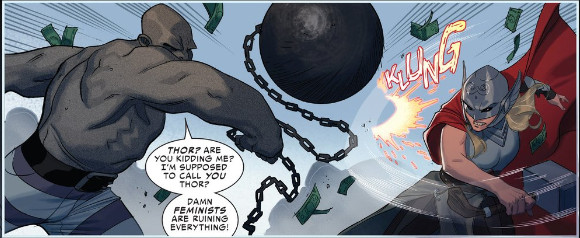
Why do I care about these hints at Roxxon? Well, it’s because it could set us up for one of the most controversial portions of the Marvel Universe. And that of course is, New Thor.

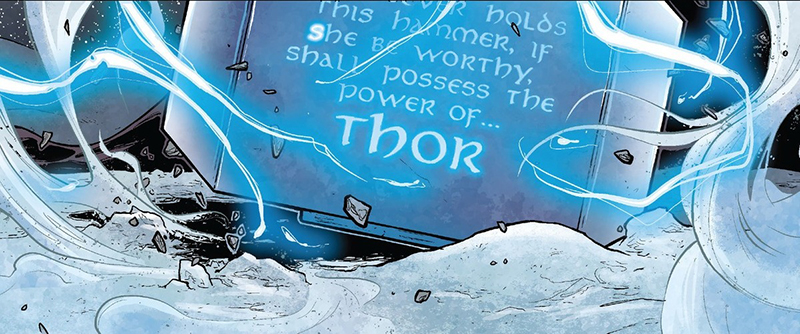
New Thor was controversial for a number of reasons, most of which are related to gender, something incorporated into the series, and the alteration of the name of Thor from name to title. This is not an unheard of practice and technically the inscription on the hammer always states that the wielder of Mjolnir held the power of Thor, not necessarily that the person who held it was named Thor. The hammer had been wielded by others in the past but in contrast the Marvel-Now Thor has separate Thor and Odinson who, while at first upset that someone else could wield his hammer, has quietly fallen into a nice supporting character while he deals with the issues of what has made him unworthy. And so far (although I’m not fully caught up) it looks like this is a pretty permanent switch.

So Thor and Roxxon, how are they related? Well the first major villain that Thor battles is a Roxxon affiliate. For those of us trying to figure out the identity of Thor this seemed to point to Agent Roz Solomon, the Odinson’s new love interest. Regardless of who Thor now is, if you haven’t read the comics yet, the mention of Roxxon in the Marvel Cinematic Universe by name has important meaning for what Marvel Studios could be planning for the future.

With the success of comics like Ms. Marvel and other lady-led titles, Thor included, fans are hungering for a female-led Marvel movie but sadly, the first one isn’t slated until 2018. While this is still a few years off, it is likely that Marvel is planning on making more woman-led movies and in my opinion Thor would be a damned fine choice. She has an established world, would require minimal “origin” story, and it would be easy for Thor: Ragnarok to contain events that somehow makes the Odinson unworthy. Because of this, every time I hear the name Roxxon or catch it attached to some object, I wonder if that’s a breadcrumb towards a Thor movie with a different Thor. Specifically, Agent Carter and Daredevil have both begun digging into the nature of the company and based on what we’ve seen so far it wouldn’t be improbable for them to expand their range to working with materials from another world.

While it’s far-fetched and Thor isn’t the most well-known of Marvel’s woman Super Heroes, I think they are setting themselves up for a very long hunt that could end with an amazing and new person picking up Mjolnir.

Tuesday, March 8, 2016

Reading in the “Wrong” Order: Reading Marvel now before reading Marvel then

I’ve mentioned in other posts that I started collecting and actively reading brand-new comics in 2013. Honestly, it was a great time for me do it. I needed a hobby in the new place I was living and it got me out of the house at least once a week. And of course the comics that were produced then, and now, continue to get better and better IMO. But I’m not the “classic” fanbase that someone, we don’t know who in the comics industry, is trying to pander to. Instead, I’m part of the “new” “wave” of “evil” “millennials” “who” “knows” “nothing” “about” “comics”. Yes because I need a different gender, race, and age to understand, appreciate, and interpret good storytelling and art. It’s not like those are subjective, things that change as you age, or are part of the basic enculturation of all people in the world. But I digress, as the Lady Swift would say “Haters gonna hate.”

Collecting late led me to a few interesting things. The main one, like the Star Trek new movie series, is that it convinced me that there was something worthwhile in the older versions of these stories. They weren’t just campy stories with too many words per panel that gatekeepers thought were some sort of glorious nerd bible.

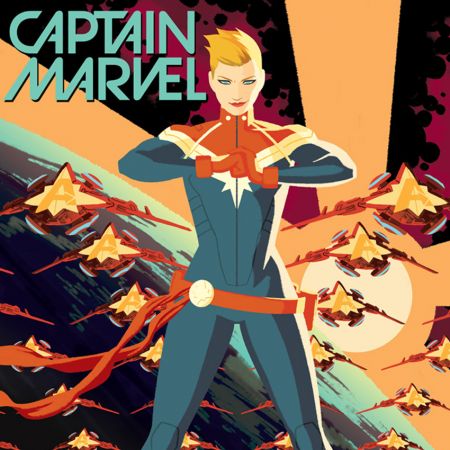
The main series that convinced me to go back and read the older versions were Kelly Sue DeConnick’s run on Captain Marvel and Charles Soule’s run on She-Hulk, which will be the foci for the rest of this post. Both comics were re-launched as part of Marvel Now, although the redesign for and run of Captain Marvel began slightly before they started using that term; and brought characters first created in the late 1970s into the ‘Now’.

Both were fantastic. The characters were flawed and centered on women with real responsibilities and problems, minus the saving-the-world-from-pending-doom part. DeConnick and Soule crafted these books with the care that I wanted from comics and their great stories were integrated with art by Emma Rios and Javier Pulido that captured the awe and draw of each character. Art is a large portion of the comics game and everyone judges books by their covers so having the amazing writing of DeConnick and Soule accompanied by such imaginative styles was truly exceptional.

Once I finished each series, or I should say in the case of She-Hulk the series finished on me, I went in search of more to learn about the development of these characters. With Captain Marvel, I went back to the source of Carol Danvers, Ms. Marvel, by reading the Essential Ms. Marvel. With She-Hulk I picked up the, She-Hulk: The Complete Collection Vol. 1 by Dan Slott. I expected both to be a bit problematic, because I was reading in the age of Social Justice Warrior comics obviously, but I was surprised by which was more problematic.

The original Ms. Marvel run went from 1977 through 1979 and the Essential volume covered issues 1-23 of the original series and Marvel Super-Heroes Magazine #10-11. While campy, with questionable costuming, Carol Danvers of the 1970s was an interesting and likeable character. In certain ways, I enjoyed this Ms. Marvel more than the modern Carol Danvers. She was more brains than brawn, something I could relate to being a petite woman getting a graduate degree. She was also unapologetically feminist arguing for more pay, editing a magazine for women but not necessarily about “women’s” things, and living on her own without a significant other. Cool and interesting in its historical context, cool and interesting today. There are problems with the way she speaks and some of her actions, which can be read as third-wave feminist but can also be read as stereotyping women’s behavior. Regardless, she was a great start to the character and I hope they blend this origin with the modern Carol Danvers when the write the script for Captain Marvel.

The Dan Slott She-Hulk: The Complete Collection Vol. 1 covers issues 1-12 from the 2004 series and 1-5 from the 2005 series and my review is less favorable for this set of comics. Although written in a more modern era, this run of She-Hulk didn’t impress me with it’s “progress”. Not that all comics need to be progressive, but Dan Slott made me disappointed with the use of She-Hulk in comics especially when this is the series many Amazon Reviewers use to compare to the work of Soule. The art is good enough, though more similar to stereotypical comics art, and Slott’s Jennifer Walters comes off as lazy and almost incapable in her practice as a lawyer. The use of the law in it is loose and the meta use of comics in the firm comes off as campy and pandering to older audiences. Seriously, do you really think in world were superheroes exist comics books could be used as legal precedent? Additionally, Jennifer seems to have lost any sense of gravity or depth, she hooks up with random guys (not a problem) but then always feels bad about it, an annoying trope for female sexuality. There are some good moments in the comic and some solid characters but it didn’t come off as particularly heartfelt or interesting and it definitely made me appreciate Soule and Pulido’s run on the comics even more. (Where the law is based on real law and She-Hulk is actually Hulky)

So what is the problem with reading Now before Then, in the “wrong order”? Nothing, inherently. Good stories and art are, at least hypothetically, timeless. For me it was the unintentional expectations that I put on these stories. It’s hard not to assume that something written in the 1970s will necessarily be bad, sexist, and trope-y or at least more so than stuff written in the last 15 years. But clearly, that wasn’t the case. These examples demonstrated to me that progress isn’t a one way street and it was a reminder that realistic and important portrayals of women and other minority characters have happened in the past.

Furthermore, what’s important about supporting such stories now, and reading and promoting those that did that in the past, is the real fear that comics, and other media, will falter and fall again on stereotypes rather than keeping us moving forward. Supporting books like She-Hulk and Captain Marvel that are able to highlight a character’s regular and super strengths help to keep us moving forward but we also need to be aware that they aren’t the first to make steps in the right direction and that once is not enough. Progress is a constant struggle and requires readers and creators to be aware of the fight.