Showing posts with label Batman. Show all posts

Thursday, August 24, 2017

Dr. Quinzel, Dr. Moone, and Systems of Oppression

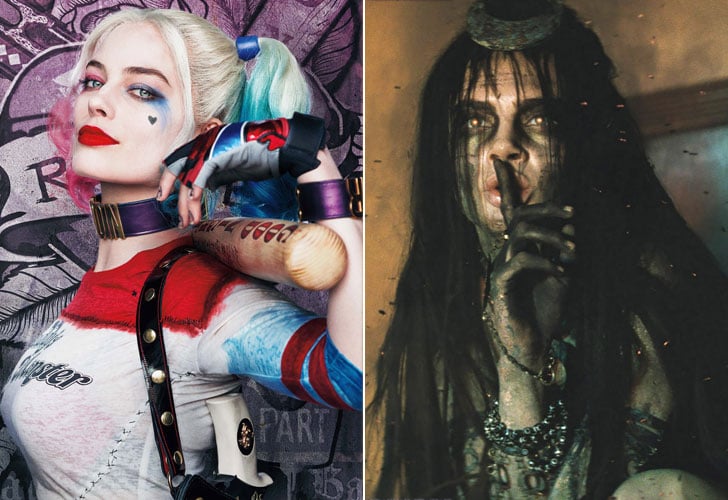
So a while back I watched Suicide Squad. You may have seen my tweets. Now a few months removed I remember it as generic, at points boring, and very poorly constructed, with a cast full of character that did not, in any way, need to be there. It was an ensemble movie for the sake of ensemble movies. However, I was surprised to find myself really enjoying the special effects for Enchantress who, spoilers, turns out to be the villain. Which is as a concept was pretty cool. Ancient deity plays stupid government who thinks they can control it. I can dig it (ha terrible archaeology joke). But beyond that, and the thing that I kept coming back to the longer I’ve been away from the film, was the fact that the Suicide Squad has not one but two women Doctors, Phds in fact, on their team. This of course fascinates me because I too will be a doctor and graduate school has a special fascination for me as someone going through the process.

In relation to the movie, Dr. June Moone’s degree is integral to the plot, as a driver for why she becomes Enchantress, while Dr. Quinzel’s is not. However, they both end up on the wrong side of the law, or at least Enchantress does. Side note: There is some debate about whether Dr. Moone has any say in the issue. Personally, I think she does and for the same reason I dislike the idea that all bad people are necessarily mentally ill or unstable or for a more “biblical” explanation are possessed by evil spirits, in some people it comes down to choice and some people do choose to do bad things and we can’t always blame it on things out of their control. In this case though, I don’t think it’s clear that Enchantress is necessarily doing anything wrong, how would you react to being trapped in a ceramic totem for thousands of years, and I don’t like the idea that Dr. Moone is just a vessel as that removes all of her agency. I don’t know how they play it in the comics, as honestly DC hasn’t sold me a on a floppy in years, if ever and her origin story there is actually as an artist, but I think Dr. Moone is there and pissed too.

Anyways, regardless of how important their particular degrees were to the plot, this is a team that consists of very educated women with essentially “common criminal” dudes. Why is it that, at least in this case, smart women and uneducated men are the villains? What does that tell us about gender in the world of DC? This is not to say that all men villains, or women heroes, are dumb or uneducated, merely that when you have a fully formed woman villain (in character) she is often smart and there is diversity in the portray of good and bad men and good women.

For me, that then becomes a question of why. Why are women villains so smart? One explanation is that these are metaphors to undermine smart women. That essentially at one point a woman learns too much to be considered a “good” or “heroic” woman and then necessarily becomes bad because women cannot be naturally bad in the same way that men can. There is also a clear history in many cultures of perpetuating the idea that smart women are not good women so it’s not surprising that this comes across in fiction.

For me, regardless of where this concept came from, if we accept the premise that being smart, or becoming educated, has something to do with becoming villains there are a couple of different roads that can lead down. There is of course, liked explored above, the idea that smart women are naturally bad, regardless of if they were inherently smart or received education. But this “essential” quality doesn’t do anything to inform characters and while not all fiction has to be an in-depth examination of the psyche, well-developed characters often come from something and this is particularly true of villains. So if we look at the idea that it is not essential or innate but instead that there is something about being smart or becoming educated that transforms smart women into villains, what systems of oppression or bigotry or misogyny compel smart women to believe that lawful actions are not the just ones or at least not ones that lead to their desired outcomes.

This runs into an issue plaguing many comics and because of DC’s growth from Detective Comics, "heroes" beating up people doing petty crimes, they seem to have suffered the most. Many people still believe in the idea that most criminals do “bad” things because they just do or are inherently bad. However, as we have learned more about the causes of poverty and criminality, de-coupling them from culturally assumed ideas about predispositions or heredity, most smash and grab criminals, like those presented in Suicide Squad, and particularly if they didn’t have powers, become less “evil” and more clearly products of structural violence. In some ways, understanding that makes one feel like there are no real villains that didn’t have a good reason for doing so, at least when it comes to the street criminals that are in many comics. With one exception in Suicide Squad, that being the Australian Bank Robber dude whose name I forgot. All the other men characters are products, to greater or lesser degrees, of structural violence and any heroes that we see *cough* Batman *cough* end up playing the role of the white-status-quo-bourgeoisie savior. He’s not saving Gotham, he’s saving an idea of a system that helps to oppress minorities and thrives on their exploitation. If those are the systems that created villains like Deadshot then what systems of oppression may have pushed women like June and Harley?

Obviously they are not the victims of race-based structural violence, being white women, and they probably had quite a bit of power in their lives to be able to pursue PhDs at all all, so what changed? What shifts an affluent white woman from the cogs of the wheel of oppression to being squashed or feeling squashed under that wheel?

Is it, in fact, the academy? I think it is and particularly because academia is in a unique situation where it both perpetuates systems of oppression and gives people the tools and knowledge to dismantle them.

How does the academy perpetuate systems of oppression? Well, almost everyone who has done graduate work will not need me to tell you. But I will because this is a blog. We can look at the fact that most academic departments are still comprised of cis-het-white-men most likely from middle-to-upper-middle class backgrounds meaning they dominate what we can call the “academy” and essentially are the academy. This is not to suggest that such people cannot promote diversity, many of the people who pushed me into graduate school were such dudes, but when you see incoming classes of graduate students who continue to reflect what came before them you, begin to wonder if they are actually doing that. Also while college education helps to level the educational playing field, studies demonstrate that college makes the field less lumpy but it is by no means flat. Those with privilege tend to be more aware of the resources available to them and continue to succeed even more, standing on the shoulders of giants. While those who do not enter with that privileged knowledge, do not enjoy additional resources and don’t get anymore help.

However, something that the academy, and education in general, are also good at doing is opening the eyes of students, at least with good professors and teachers, to witness and recognize systems of oppression. In many cases, giving students the tools to recognize what is wrong in society and the hope of being able to fix it. Education is how you learned about systems of oppression, structural violence, and issues of intersectionality. Or at least you can, it is an option. Not everyone takes that option, which is probably why changes in academia have not been as fast as they should be.

Ok So how does this create white women villains with PhDs? Well it creates a system that will oppress them, a la institutional sexism if they want to pursue work beyond their PhDs or just even conduct their PhD research, and the knowledge about that system to want to fight back. It removes them from the Ivory Tower and places them at odds with the things that created their knowledge and impacts their abilities to succeed as much as their white-male colleagues.

For me that transition is the most interesting part of the stories of Harley and June, outside of current cannon and Suicide Squad as a film. Particularly in the case of Dr. Quinzel. What in your life as a psychologist happens that makes the thoughts of a known psychopath, or obviously bad dude, seem to make sense? I don’t assume that she didn’t already have issues going in, as the show Hannibal likes to portray all therapists have their own therapists, but she knows all about psychological issues, manipulation, and had to go through extensive training for these things. So what changes, what makes the ideas of a patient seem like the sanest perspective. Personally, I don’t find the “she fell in love with him” aspect to really mean anything or allow for much discussion but even if that were the case it still follows this path. Dr. Moone’s path is more complicated because of the issue of, at least in the movie, her possession, which does crazy things with her agency. But if we assume that she has at least some choice in the matter, what changes in her where the ideas of an ancient deity wanting to reign havoc seem like the best possible option.

I have some ideas but I’m not a comics writer. I’m just someone going through a PhD and I can definitely see where any of us might run off the rails, in a world where supervillainy is a thing. Regardless, these titles are not just aesthetic. They imply something about the characters and about our society. They help us to understand their motivations and create richer stories for the public to consume and it does the dual duty, like many comics and science fiction did in the past, of exploring serious social issues in a detached world allowing those who don’t have the eyes to see them in our world explore them in a different one.

Sunday, May 7, 2017

My thoughts on two-bit Marvel Batman or wait…I mean Iron Fist

There are many ways to start this blog. I could relate it to my experiences growing up mixed race, I could start it talking about the tweet storm that descended every time I watched a minute of Iron Fist, and a million other ways that begin academically/professionally but end up a mire of foaming-at-the-mouth rage. But honestly, Danny’s not worth that sort of time or energy.

Those of you who read this (all four!) will probably recognize these ideas from previous tweets, Facebook posts, and angry/exasperated text messages but I’ve probably spent more time thinking about Danny Rand than the writers did so I thought I should have all of those ideas organized in one place. I will also try to refer to much smarter minds than myself for some of these issues because I am only one person and can’t think of all the ways this was entirely mediocre.

You may be thinking “Paulina, if you hated it so much, why did you finish it?” Well, person who questions my life choices, it started with a podcast I did with the awesome Daniel Kwan at the SAAs in Vancouver. We chatted about everything under the sun regarding diversity and being of Asian heritage, and at one point we started ripping into Iron Fist, which had just come out. Between the two of us, we had seen maybe an episode or two, but we had seen enough to joke about forcing ourselves to watch the whole thing then do another Podcast. I thought, hey sure, I’ll give it a chance even though there are tons of articles coming out about how boring it was etc. [All the hyperlinks]. I also had a morbid interest in actually seeing what was going on because I enjoy the Marvel cinematic/Netflix Universe and Colleen Wing seemed like such a boss.

So, post SAA, but before returning to school the BF and I put the first two episodes on and realized very quickly that there was no way in hell we could get ourselves to finish this on its own. So we decided, let’s pair this with Into the Badlands which we had both heard great things about. I put the first five minutes on and was like “This dude riding on this motorcycle is more interesting than that whole episode of Iron Fist”. From then on, we had a formula, two episodes of Iron Fist to one episode of Into the Badlands.

(NOTE: I would instead recommend just watching Into the Badlands and, if you really need to know, Googling a synopsis of Iron Fist and watching the fight with Lewis Tan. Then maybe re-watch the Defenders trailer to see how many times Jessica Jones sasses Danny because he deserves it.)

So what was so bad about it? Well, almost everything. The casting was unimpressive, the acting was bad, the fight scenes were boring, the overall plot was unclear, the writing was atrocious, and the show did nothing to improve the problematic origins of the character. I’ll try to address my critiques in that order, otherwise I’ll die of an aneurysm. However, honestly, they bleed and crisscross one another so it’s hard to say where one of these critiques ends and the next begins.

Casting: Danny Rand is white in the comics but he’s also supposed to be interesting and capable. For training so much as a monk, he is not that physically impressive and isn’t that good at martial arts. Marvel cannot tell me they could not find a decent-looking blonde, white actor who knew at least some Kung-Fu. There are tons of Caucasian dudes who do Kung-Fu, so, it’s absurd that they went with someone who so minimally fit the visual profile of Danny Rand.

The acting: So the writing is atrocious, which I’ll get to in a second, but Finn Jones doesn’t do much to convince me of anything. He looks like a petulant child when he’s angry, which is about 75% of the time. And his uncontrollable anger/anxiety does not do justice to those who experience such emotions. I’ve seen people go through such episodes and Finn acts them so badly they are borderline comedic, which is not what we want when right now we do so little to support people with mental health problems. Especially coming after Jessica Jones, which did such a great job with that, the poor acting surrounding such issues is truly infuriating.

The fight scenes: So there were a couple good ones, I will give them that. HOWEVER, THE WHOLE POINT OF THE IRON FIST IS MARTIAL ARTS MASTERY. Literally, he was created alongside characters like Shang-Chi, Colleen Wing, and Misty Knight as part of a growing line of martial arts heroes. So, his martial arts should be impeccable. Instead, there is a stiffness whenever Finn Jones executes moves that makes the divide when he fights professionals, like the fight with Lewis Tan, even larger. This makes his entire purpose (master of kung fu) unbelievable and his whole character come off as mediocre. Also, as he’s told us, like five million times, he has been training for 15 years doing Kung-Fu in a place surrounded by Kung-Fu masters who only doing Kung-Fu. Did I mention Kung Fu? (Or that you’d get more students if you taught Kung-Fu even though it’s clearly a Japanese constellation martial arts studio?) HE ALSO DEFEATED A REAL DRAGON TO GET HIS POWERS WITH HIS KUNG FU. Overall, the scenes feel slow when you can actually see people move or they’re cutting between shots so quickly you have no time to actually admire the fighting that’s going on. They also do “cool” but tricksy cinematic shots like stage fights at night or in dimly light areas, meaning they can hide what’s not going well in the fight. This became even more obnoxious when pairing the show with Into the Badlands, whose bread and butter is epic long-cut fight scenes. And to top it off, multiple times in the show he is on the precipice of LOSING, badly, to people who should not be close to his equal.

The overall plot: How did Danny get to New York without a passport or identification? How does he know how to drive an actual car? Why does he still speak American English? Why does he still act white in his physicality? Why was David Wenham’s character even there? What was the point of Davos coming back? What was the point of this season? What did we learn about who Danny is? What did we actually learn about his origin? WHAT IS HE EVEN FIGHTING FOR? Because honestly, I’m not sure and the overall plot seemed to want to be half introduce the Hand, while actually giving us no real information about the Hand except maybe hinting at Bad Davos, and half “PLEASE LIKE DANNY”. But what does Danny fight for? So far as I could tell, he felt like Marvel’s mediocre Batman. His parents are killed, he gets trained in the ways of an Eastern martial arts, comes back and then RETAKES THE COMPANY and gets vengeance?! It’s Batman Begins but boring and, sidenote, Finn Jones is not as hot as Christian Bale. ANYWAYS what is he fighting for? He has no real ties to New York beyond the five people he’s met and honestly being away from 15 years and growing up with monks would probably make places like New York and the whole American system feel extremely cruel. So why stay? And honestly, the way he interacts with his company in New York feels like the most white-people-problems shit I’ve ever seen, it’s like he’s still a child even though clearly Davos, who also is from K’un L’un, can act like an adult and still have a little bit of fish-out-of-water too. Also Thor was a fish-out-of-water and didn’t come across as an annoyingly naïve child.

The writing:Worst Iron Fist ever.” “This means I have to kill him for you” “But I’m Danny Rand” “I’m Danny Rand” “I’M DANNY RAND” These are the lines I remember from this show. Particularly, because I laughed at all of them. The plot, as mentioned above, was confusing but so often the individual lines were just absurd. They were written stiff, acted stiffly, and did not convey anything that they should have. It’s like, did no one edit the scripts for these episodes? Because they were trash and it’s like, we really know you are Danny Rand, seriously, you can stop saying your name. It’s like he was some sort of Pokemon that got stuck only saying their own name for 13 episodes.

And lastly, but not leastly, the Problematic Origins of the Iron Fist:

Like most superheroes, beyond ye olde white-straight-cis-het-male-American heroes, the origins of Danny Rand and his whole schtick are problematic. Why? Well like Luke Cage and Shang-Chi, he was created at a point in time where comics were written by white-cis-het-male-Americans who had no idea about cultural appropriation and had yet to take the time to examine how their culture was inherently racist. So, these characters, while great for bringing “diversity” into comics, contain horrible stereotypes that modern writers have spent a lot of time fixing. Essentially, if you pick up any Luke Cage comics before 2000, though some may also take issue with the Max CAGE series, you will see a horribly stereotyped essentially racist portrayal of an African American man. The Netflix series dispels most of that, and created a well-rounded solid representation of an African American man, and modern African American culture, and engaged with how his power was a symbol for the ongoing conflict we have in this country between structural violence and the African American body.

Iron Fist? Yeah…No. Full disclosure, I haven’t read much Iron Fist. However, there are tons of articles out there by people who have but I’m going to give my two cents on some of the excuses I have heard about Iron Fist:

“But Danny is white in the comics!”

Yes and so were Elektra and Psylocke originally and they were be played by Asian heritage actors.

“His race doesn’t really matter!”

If his race doesn’t really matter why did you pick a white person? White is not the global average for generic! It’s white and has just as much racial baggage as any other choice. Especially when he had no martial arts background anyways!

“He was supposed to feel like the other”

Where? We don’t see his training in K’un L’un where he is supposedly an “outsider” (like being picked on by all the mean Asian boys) and clearly he was less of an outsider than he claimed if he had the same rights as everyone else at the monastery. Is he an outsider in New York? He sort of is, but that could be done with anyone because that’s personality and not physical perception. Also if it’s about feeling like the "other" any Asian American will tell you that no matter how similar you might look to others in Asia, they know when you aren’t a local. Also we’ve had the white-guy in Asia outsider story told like a Kajillion times before, this isn’t unique (See the Last Samurai).

“There are other Asian superheroes that Marvel can use”

Yes all five of them. There actually is a paucity of well-developed Asian-American heroes in the Marvel universe and they get whitewashed anyways (see: The Ancient One)! Seriously, if you read Totally Awesome Hulk #15 you’ll see almost all of the Asian American superheroes Marvel has on offer (sans X-men). Also, the three most well-known ones were created in the last five years and are ALL spin-offs/new mantel takers (Ms. Marvel, Totally Awesome Hulk, and Silk) so doing this to Iron Fist would not have been out of step with what Marvel is doing already. Additionally, the Iron Fist is a mantel, not a person, and they change all the time. There have been many Iron Fists, the series The Immortal Iron Fist talks about them, and Marvel is not married to its cannon (Psylocke literally spontaneously changes ethnicities in the comics at one point). There is no reason to preserve his ethnicity when it serves no purpose to the story, it embodies a type of cultural appropriation, and forwards the stereotype that Caucasians are better at being Asians than Asian people. Even better, they could have done a swap, like they did with Patsy Walker for Carol Danvers in Jessica Jones! Shang-Chi could have been originally named Danny Rand but given a new name by the monks or become the Iron Fist and blam, you make a fine swap/merge and the world keeps turning.

There are probably lots of other “but actuallys” or “what ifs” but overall Iron Fist wasn’t good and while it wouldn’t have fixed the other problems casting an Asian-heritage actor as Danny would have lessened a lot of the sting. By choosing to cast a Caucasian actor, they don’t acknowledge the orientalist origin of his character or adapt his story to fit modern relationships with Asian nations, heritage, and culture and they didn't use his own backstory to make up for the those problems. For example, they don't take the idea of being raised in another culture to their logical end. He didn't act like a monk in his physicality, he speaks English like they only spoke English in K'un L'un, and overall nothing about his character besides his fighting skills and him telling us he's been to K'un L'un point him being brought up in a completely different culture.

They didn't follow any of their own plot points to their logical conclusion and while they may still have not done that with an Asian American actor like Lewis Tan they would have at least helped rectify the appropriative origins of the character. Assuming they had actually cast Lewis Tan this blog would be like “At least the fight scenes were awesome and they followed through with a commitment to diversity” instead of “Why didn’t we burn this before it began?”

Saturday, February 27, 2016

The Rule

Note: This blog was initially written as part of an application for the comic website Panels on 25 Feb 2016. - Paulina

I didn’t start buying floppies until I was 22, just before I finished my first year of graduate school. It wasn’t because I didn’t enjoy reading comics, I did, it was that as a kid my parents encouraged the use of the library. Also we were middle class and at the rate that I read manga buying them really made no sense.

Anyways, soon after I started collecting I became interested in the diversity of the comics industry. While not something I had actively cared about before I started collecting, the more I learned about it the more I realized that lack of diversity had kept me from pursuing my interest in American comics as a child. As a 9-year-old girl of mixed-race (Filipino-Polish if that matters to you) it was much easier to pick up manga like Sailor Moon, Card Captor Sakura, or Inu-Yasha and relate to those characters than it was to start reading Batman where 1) there was no clear place to begin 2) it was hard to imagine myself as a stupidly wealthy middle aged white man.

So this got me thinking and after a year of collecting and going religiously to my local shop and grabbing up whatever sounded cool I realized I was adding too many books to my list and I needed a way to pare down the possibilities. (Not that you necessarily should, I just didn’t have the income to support my growing habit). And after some thought I came up with one rule:

No diversity within the comic or its creation, no way its getting my money as a full-priced floppy.

What does this mean?

It means that I don’t buy comics for full price that are made by white males about white males.

What doesn’t this mean?

-It doesn’t mean that those stories are bad.

-It doesn’t mean that the stories I’m left with are good.

-It doesn’t mean I would buy any story that met that criteria.

-It doesn’t mean I won’t ever read those stories.

-It doesn’t mean that I won’t eventually purchase those stories.

It was a way to merge my passions and meet my economic need. I could promote diversity in comics by putting my money where my mouth was and pre-ordering books with main characters who were women and/or people of color and/or stories that women and/or people of color made. To boot, it’s a pretty easy rule to remember and follow.

After I started filtering books by this rule, I realized how many new titles, creator owned and those promoted by the big two, didn’t meet my qualifications. It was a comics Bechdel test and there were months that would go by where no new titles followed my rule AND sounded interesting enough to purchase. Also like the Bechdel test, I knew it isn’t/wasn’t a perfect rule. Furthering the parallel though, it made me think seriously about all those stories that didn’t have women or people of color as main characters or as key creators.

Most of us know that what keeps women and people of color from entering the industry is an intersectional problem that involves the conception and a perpetuation of the idea that those industries “are” middle-class and white and male. This is a problem in almost all nerdy industries. More striking to me was the lack of women and people of color as main characters. What was it about a story that involved a “young boy discovering his destiny as X” that required him to be a) a boy (or male or gendered at all) b) illustrated as Caucasian. Was there some sort of special penis requirement for this destiny that also required the palest of complexions with European features? No, there wasn’t. Instead, these stories revealed a level of contentedness with “industry” standards and a lack of questioning of the ideology of the “typical” comic-book character. The industry assumed a white male audience and so they continued to give that audience stories that they could easily identify with. It wasn’t that white-male audiences couldn’t identify with diversity, we all know they can, it’s just that the industry didn’t think to make them try.

Thankfully, this is changing and every week more titles are coming out from DC and Marvel and Image that mimic the reality of comic book reading audiences. Where the characters and creators are increasingly diverse in age, gender, sex, race, ethnicity, sexuality, and class background. But I keep my rule anyways. Partially because my comics are piling up in another state and I’m not adding any books at the moment but also because it’s still a good rule to have. If a comic can’t find a woman and/or a person of color to be a part of its creation, in any capacity, and they don’t have them incorporated into the story in a significant way is it an artistic choice or just laziness?