Showing posts with label Sci-fi. Show all posts

Sunday, April 24, 2016

Marvel and the American Government: The potential and danger of Captain America: Civil War

Civil War doesn’t come out for a few weeks but I’ve been catching up on the world they are living in through Agents of Shield. AoS has grown into quite an amazing show and is dealing with complex and layered issues, something you wouldn’t expect based on their first season.

Anyways, I have many trepidations about Civil War particularly because they’ve been marketing it as a sort of Marvel-Team version of Batman vs. Superman. #TeamCap versus #TeamIronMan and all that. However, that doesn’t do justice to the importance of the Civil War plotline. The Marvel “event” known as Civil War ran in 2006-2007 and as I’ve continued reading American comics, it has been the only event to maintain my interest. This was because Superheroes were dealing with an investigation of the role of government.

The interesting thing about that series coming out during the Bush-era was that the idea of going along with the government wasn’t quite as heinous as it is now. We knew there was wire-tapping and the Patriot Act but the surveillance state that we live in now is much more insidious than the one Marvel dealt with in 2006. For that reason, I am having a hard time deciding how I feel about the premise for Civil War, especially if they keep it the same. Based on the comics, I understand Iron Man’s position to be if superheroes do not participate in creating legislation to govern and register themselves the outcome would be even worse. Something akin to the Japanese internment camps but for superheroes. Captain America’s position is that the government should never require their citizens to share their personal identity and secrets. Both have their values particularly because in the comics the legislation is inevitable. It will pass, the difference is in its form.

In a world with unpredictable superpowers, governments would be afraid. So their reaction would be to legislate, police, and surveil, using the only things in their power to maintain order and control, especially, when it’s clear that The Avengers can’t protect from those with bad intentions. But that’s the comics. What has caught my eye about AoS is that they are dealing with these issues in a very realistic way, providing the importance and depth of the Civil War premise. Using the Agents to examine how regular people feel about those with powers they are providing the parallels to the real world, the hate of illegal immigrants and discussion about how government(s) are involved in the lives of citizens, demonstrating the potential importance of the film.

However, I still worry about Civil War because it’s most comparable film is Age of Ultron. The issues in the comics are more about talking than they are about fighting in the streets, which is not what we’re seeing from the trailers and definitely not what we got in Age of Ultron. Not all Marvel movies have serious issues at their heart but the interesting discussion in Ultron of whether humanity is capable of peace was not the main focus. Rather than develop and use the beauty of Science Fiction as a critique and discussion of ourselves it was about blowing up large buildings.

Civil War can’t have that sort of treatment because the enemy is each other. There is no “big bad” we can throw this discussion onto. There is only the deeply polarizing and complicated issue about the relationship between the individual and the state. What rights do we give up as citizens in order to have other rights allowed to us? The right to healthcare may involve a loss of privacy in order to access that healthcare anywhere. However, people give up their privacy in so many ways already but to private companies rather than the government. We just don’t think about it when we sign into Facebook or Twitter or forget to turn of GPS tracking on Google Maps.

The only why that I can see Civil War being truly successful is if they can make audiences believe both sides of the argument and that will require more dialogue than punches. And if that happens, it will be probably be the most important Marvel movie made so far.

Thursday, April 7, 2016

Influence, Adaptation, and Appropriation: Part 1 – The inspiration

At the beginning of March in response to a pop-culture piece, the specific one I can’t recall it may have been J.K. Rowling, I posted the tweet:

“Pan-culturalism and appropriation in the "future": Dealing with using cultural designs and culture in Sci-Fi worldbuilding”

And one of my friends, suggested I submit it as a panel for Geek Girl Con. So, at the end of March I did with a slight modification to the idea. I retitled it to be the same as the above post and made it more general about using cultures that are not your own to build fantastical worlds. I posted on Facebook about this and people were supportive, both interested in examining this concept and posting ideas for which Science Fiction and Fantasy works should be part of the discussion. Since that time, I’ve been thinking about this topic (Today’s inspiration being Kung-Fu Panda 3). My primary thoughts being, “Am I qualified to lead a discussion about this?” and the following, “I should really put some of my thoughts about this down.”

I am not a writer of science fiction or fantasy, unless you count archaeological interpretation (zing!). I am primarily a consumer with a little bit more education and a compulsion to write my ideas down. I am also a woman of mixed-race so I have a tendency to complicate issues and investigate them within my more complex experience as a human, adding academic insight where possible and if possible.

So let me unpack my tweet a bit. (Anthropologists love unpacking, maybe because we travel alot) It came in response to the use of another culture by someone who was not of that culture to create a fictional story and world. Not necessarily a bad thing but that person was most likely white and was using another culture for personal gain. This got me thinking about how in science fictional futures there is an assumed blending of cultures where as humans progress through time our distinctions between cultures become more blurred and essentially this only one “human” culture. And following the current world trajectory that future is often heavily influenced by Asian cultures and most often East-Asian cultures. We see this in Blade Runner, Firefly, and the re-make of Total Recall, to name a few examples.

This hypotheses, of a blending of cultures, isn’t too far off. We’ve seen in the last 100 years the loss of much of our language diversity and many issues in anthropology boil down to globalization. There are very few, if any, cultures on our planet that have not heard of or interacted with technology in some way and most “traditional” cultures are still influenced at least indirectly by general improvements in medicine and other sciences. So, it is not far-fetched to assume that in the future, assuming we follow our current path, humans across the globe will be more similar to each other in the future than they are today.

However, how you portray this blending is important. Specifically, all of the above listed examples, and there are many more, do not display the biological blending that is also predicted for our globe. They instead preserve modern racial distinctions and grab the symbols of another culture. And there, my friends, is the rub. There is no example in the history of humanity where you have heavy, and dominating, cultural influence without biological mixing and the problem with not portraying that is it allows modernly powerful ethnicities to take on the cultures of others without giving those people their due.

It is, unfortunately, appropriation rather than adaptation or influence and the relationship between the three is what I will explore in more detail in following posts.

Monday, March 21, 2016

PPPs: Paranormal Police Procedurals – Part I

As I’ve said before, I watch a lot of TV and most it is sci-fi or fantasy oriented in some way. Why? Because if I want something realistic I live in a city where a colleague had two of her students witness gun violence over the weekend. I don’t need to pretend stuff like that happens when it actually does. Anyway, I had noticed a few years back, about when Castle began, that there was a new formula for “hit-show”. Police officer + some atypical profession that helps solve crimes. I see this as starting with Bones in 2005 and continuing into the present.

However, it wasn’t until last year when my friend mentioned how she had a hard time watching police procedurals that it hit me, a new version of that formula had come into being. The Paranormal Police Procedural (PPP). The formula now being police officer + person with magical/special ability. Like regular police procedurals there is a certain amount of boredom that comes from their formula. To combat this though, unlike regular police procedurals that often have to fall back on romance (or lawyering) to fill in the gaps, paranormal police procedurals can fill in those gaps by providing background on the paranormal half of their show. There of course are romances anyways but they don’t have to share the weight of the story in the same way.

I’ve wanted to write about them as a sub-genre for a while but couldn’t figure out a good way to do them. So I’m going to follow up on this blog with a more detailed explorations of some PPPs but here are some preliminary thoughts the genre.

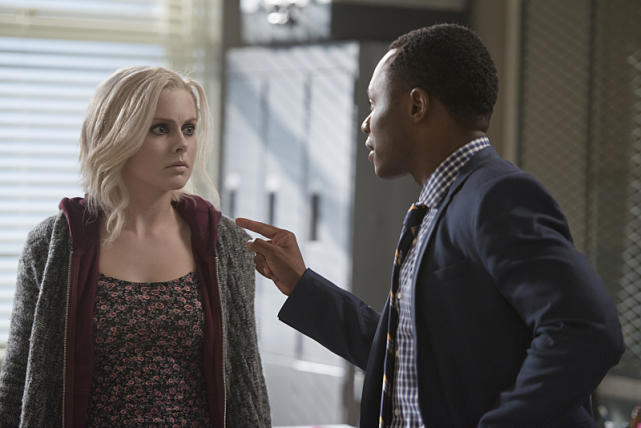
Of the four main PPPs (Sleepy Hollow, Grimm, Lucifer, and iZombie), each of these uses a different paranormal pretense for the show though they can be grouped into a number of tuples such as based on folk tales, based on comics, related to Christian beliefs, normal-turned-not-normal-person etc. The longest running of these has been Grimm (recently aired its 100th episode) and Lucifer just started this last January. So there are plenty more shows that could get on the market and take advantage of this system. But what does it matter? Why the sub-genre?

As I mentioned above I think it is born out of an easy way to get a “hit” show and extend it’s lifetime over multiple season. We haven’t eliminated murder so there are infinite ways for the paranormal sidekick to be useful in that respect but the problem is that, depending on the premise for the paranormal aspect and it’s development and depth, there is only so much paranormal to draw on. The success story being Grimm, which recently aired it’s 100th episode, and, besides shows that get cancelled in infancy, the great start but faltering Sleepy Hollow.

They also draw on rising popularity of science fiction and fantasy in television in general. While these have always been TV accessible genres, the number of these shows increases each year and expands out from network television into Netflix, Amazon, and Hulu productions as well. As technology expands and becomes more complex there are more ways for these to become interesting fiction stories and toe the line between explorations of science and fantastical uses of scientific premises. Essentially, PPPs combine the best of two worlds. The shows draw on two long standing-human fascinations, the obsession and fascination with death and of the inexplicable. Put them together and you generally have a pretty great show, even if it’s nothing like it’s source material.

The following blogs will explore some PPPs in more detail and examine how it is the paranormal premise, and not the police procedural portion, that appears to affect long-term watchability and consistency in a PPP.

Sunday, February 28, 2016

The Girl with Many Faces

I really like watching TV. Like a lot. Which means I watch a lot of shows that aren’t very good. *cough* Once Upon a Time *cough*. But that doesn’t mean I’m blind to the ways that these shows are bad *cough* writing and character development *cough*. It just means I accept their flaws and move forward accepting that is how it is going to be. However, a few tropes have started to bother me because they have shown up in multiple shows that are good and that I like. While not necessarily bad tropes, I find the repetition of a plot device between shows rather fascinating. The two main ones that have continued to bother me are a) lesbians who only talk about men b) the girl with many faces. In this post, I’m going to talk about the latter as I need to remember my other example for a) before I write about it.

The girl with many faces is a trope I noticed specifically in iZombie (a show that I adore) and Dollhouse (a show that I liked a lot). It also appears to varying degrees in other shows such as Agent Carter (which I adore) and probably Alias (a show I haven’t seen) but to varying degrees. What is the girl with many faces? Well, she’s essentially whatever you want her to be. In the case, of iZombie and Dollhouse she is the main character but in almost every episode she takes on either all or part of an entirely different persona.

What’s cool about this? Well, audience members of different personality types can identify with the character depending on who they are in the episode. She can be anyone’s Mary Sue or fanfiction character, taking on the traits you want including butt-kicking, seduction, and intelligence. She can be confident or meek having tech skills or be handy with sewing. The world is her personality.

What isn’t so cool? Well, sometimes the development of female character as an individual is lost. This point often becomes part of character building. In iZombie, Liv is constantly battling with who she is on and off particular individual brains. However, characterizing Liv is still sort of difficult and comes into a sort of stark contrast with Gwen, the character in the comic that iZombie is based off of, who gets memory flashbacks but does not take on the personalities of those individuals. In Dollhouse, this comes with Echo’s increasing self-awareness but still Echo is essentially a tabula rasa for whatever the writers decide who she’s going to be. In both cases, there is a need to write at least two parallel personalities and sometimes the life of either the “true” main character or their “personality of the week” falls a bit short.

Beyond how well this is executed, it was an interesting trope to identify because it perpetuates an odd facet of gender in America. To a certain degree, women are taught to be what they are told to be. Meaning women are taught that whatever someone tells you to be you sort of should be. Women’s behaviors and personalities are encouraged to be more adaptable than men’s. This isn’t always true but I don’t think it’s accidental that both Dollhouse and iZombie focus on females who changes personalities as opposed to males. It is true that both do have male characters who take on different personalities but most cases these examples don’t highlight the extreme differences between one personality and the next, with much more detail given to the female personalities than the males. Or there are a larger number of female-centric episodes as opposed to male centric episodes. The one exception that I can recall is in season 1 of iZombie where Lowell mentions he’s on “gay brain.” However, almost every other male zombie appears to be unaffected, or only minimally affected, by the personalities of those they eat. Dollhouse also had Victor, a male doll, but it’s difficult for me to recall more than a few episodes that had his new persona as a main focus.

This isn’t necessarily a bad device. I really like(d) both of these shows. They have (had) good action, story, and writing with awesome female leads (and we need more of them). But why do cool women have to also be something like 30 other women. Yes, as a young girl I wanted to be all things awesome but at the same time it would be nice to have cool female characters that didn’t have to change all the time to fit the situation. And there are good examples of this, but at the same time why does it appear so often? Is it really so difficult to write one, stable although reflective and evolving, female personality?