Thursday, August 24, 2017

Dr. Quinzel, Dr. Moone, and Systems of Oppression

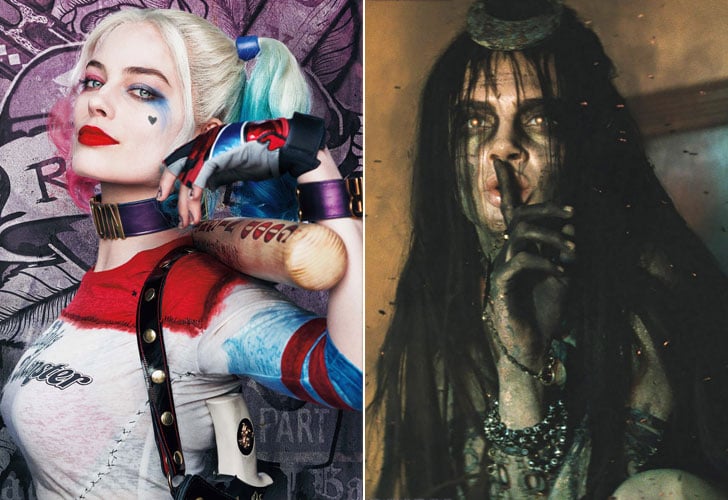
So a while back I watched Suicide Squad. You may have seen my tweets. Now a few months removed I remember it as generic, at points boring, and very poorly constructed, with a cast full of character that did not, in any way, need to be there. It was an ensemble movie for the sake of ensemble movies. However, I was surprised to find myself really enjoying the special effects for Enchantress who, spoilers, turns out to be the villain. Which is as a concept was pretty cool. Ancient deity plays stupid government who thinks they can control it. I can dig it (ha terrible archaeology joke). But beyond that, and the thing that I kept coming back to the longer I’ve been away from the film, was the fact that the Suicide Squad has not one but two women Doctors, Phds in fact, on their team. This of course fascinates me because I too will be a doctor and graduate school has a special fascination for me as someone going through the process.

In relation to the movie, Dr. June Moone’s degree is integral to the plot, as a driver for why she becomes Enchantress, while Dr. Quinzel’s is not. However, they both end up on the wrong side of the law, or at least Enchantress does. Side note: There is some debate about whether Dr. Moone has any say in the issue. Personally, I think she does and for the same reason I dislike the idea that all bad people are necessarily mentally ill or unstable or for a more “biblical” explanation are possessed by evil spirits, in some people it comes down to choice and some people do choose to do bad things and we can’t always blame it on things out of their control. In this case though, I don’t think it’s clear that Enchantress is necessarily doing anything wrong, how would you react to being trapped in a ceramic totem for thousands of years, and I don’t like the idea that Dr. Moone is just a vessel as that removes all of her agency. I don’t know how they play it in the comics, as honestly DC hasn’t sold me a on a floppy in years, if ever and her origin story there is actually as an artist, but I think Dr. Moone is there and pissed too.

Anyways, regardless of how important their particular degrees were to the plot, this is a team that consists of very educated women with essentially “common criminal” dudes. Why is it that, at least in this case, smart women and uneducated men are the villains? What does that tell us about gender in the world of DC? This is not to say that all men villains, or women heroes, are dumb or uneducated, merely that when you have a fully formed woman villain (in character) she is often smart and there is diversity in the portray of good and bad men and good women.

For me, that then becomes a question of why. Why are women villains so smart? One explanation is that these are metaphors to undermine smart women. That essentially at one point a woman learns too much to be considered a “good” or “heroic” woman and then necessarily becomes bad because women cannot be naturally bad in the same way that men can. There is also a clear history in many cultures of perpetuating the idea that smart women are not good women so it’s not surprising that this comes across in fiction.

For me, regardless of where this concept came from, if we accept the premise that being smart, or becoming educated, has something to do with becoming villains there are a couple of different roads that can lead down. There is of course, liked explored above, the idea that smart women are naturally bad, regardless of if they were inherently smart or received education. But this “essential” quality doesn’t do anything to inform characters and while not all fiction has to be an in-depth examination of the psyche, well-developed characters often come from something and this is particularly true of villains. So if we look at the idea that it is not essential or innate but instead that there is something about being smart or becoming educated that transforms smart women into villains, what systems of oppression or bigotry or misogyny compel smart women to believe that lawful actions are not the just ones or at least not ones that lead to their desired outcomes.

This runs into an issue plaguing many comics and because of DC’s growth from Detective Comics, "heroes" beating up people doing petty crimes, they seem to have suffered the most. Many people still believe in the idea that most criminals do “bad” things because they just do or are inherently bad. However, as we have learned more about the causes of poverty and criminality, de-coupling them from culturally assumed ideas about predispositions or heredity, most smash and grab criminals, like those presented in Suicide Squad, and particularly if they didn’t have powers, become less “evil” and more clearly products of structural violence. In some ways, understanding that makes one feel like there are no real villains that didn’t have a good reason for doing so, at least when it comes to the street criminals that are in many comics. With one exception in Suicide Squad, that being the Australian Bank Robber dude whose name I forgot. All the other men characters are products, to greater or lesser degrees, of structural violence and any heroes that we see *cough* Batman *cough* end up playing the role of the white-status-quo-bourgeoisie savior. He’s not saving Gotham, he’s saving an idea of a system that helps to oppress minorities and thrives on their exploitation. If those are the systems that created villains like Deadshot then what systems of oppression may have pushed women like June and Harley?

Obviously they are not the victims of race-based structural violence, being white women, and they probably had quite a bit of power in their lives to be able to pursue PhDs at all all, so what changed? What shifts an affluent white woman from the cogs of the wheel of oppression to being squashed or feeling squashed under that wheel?

Is it, in fact, the academy? I think it is and particularly because academia is in a unique situation where it both perpetuates systems of oppression and gives people the tools and knowledge to dismantle them.

How does the academy perpetuate systems of oppression? Well, almost everyone who has done graduate work will not need me to tell you. But I will because this is a blog. We can look at the fact that most academic departments are still comprised of cis-het-white-men most likely from middle-to-upper-middle class backgrounds meaning they dominate what we can call the “academy” and essentially are the academy. This is not to suggest that such people cannot promote diversity, many of the people who pushed me into graduate school were such dudes, but when you see incoming classes of graduate students who continue to reflect what came before them you, begin to wonder if they are actually doing that. Also while college education helps to level the educational playing field, studies demonstrate that college makes the field less lumpy but it is by no means flat. Those with privilege tend to be more aware of the resources available to them and continue to succeed even more, standing on the shoulders of giants. While those who do not enter with that privileged knowledge, do not enjoy additional resources and don’t get anymore help.

However, something that the academy, and education in general, are also good at doing is opening the eyes of students, at least with good professors and teachers, to witness and recognize systems of oppression. In many cases, giving students the tools to recognize what is wrong in society and the hope of being able to fix it. Education is how you learned about systems of oppression, structural violence, and issues of intersectionality. Or at least you can, it is an option. Not everyone takes that option, which is probably why changes in academia have not been as fast as they should be.

Ok So how does this create white women villains with PhDs? Well it creates a system that will oppress them, a la institutional sexism if they want to pursue work beyond their PhDs or just even conduct their PhD research, and the knowledge about that system to want to fight back. It removes them from the Ivory Tower and places them at odds with the things that created their knowledge and impacts their abilities to succeed as much as their white-male colleagues.

For me that transition is the most interesting part of the stories of Harley and June, outside of current cannon and Suicide Squad as a film. Particularly in the case of Dr. Quinzel. What in your life as a psychologist happens that makes the thoughts of a known psychopath, or obviously bad dude, seem to make sense? I don’t assume that she didn’t already have issues going in, as the show Hannibal likes to portray all therapists have their own therapists, but she knows all about psychological issues, manipulation, and had to go through extensive training for these things. So what changes, what makes the ideas of a patient seem like the sanest perspective. Personally, I don’t find the “she fell in love with him” aspect to really mean anything or allow for much discussion but even if that were the case it still follows this path. Dr. Moone’s path is more complicated because of the issue of, at least in the movie, her possession, which does crazy things with her agency. But if we assume that she has at least some choice in the matter, what changes in her where the ideas of an ancient deity wanting to reign havoc seem like the best possible option.

I have some ideas but I’m not a comics writer. I’m just someone going through a PhD and I can definitely see where any of us might run off the rails, in a world where supervillainy is a thing. Regardless, these titles are not just aesthetic. They imply something about the characters and about our society. They help us to understand their motivations and create richer stories for the public to consume and it does the dual duty, like many comics and science fiction did in the past, of exploring serious social issues in a detached world allowing those who don’t have the eyes to see them in our world explore them in a different one.

Sunday, August 20, 2017

There's more, I promise

Hey! So this still exists and I'm working on a lot of blogs right now that will hopefully make for some entertaining reading over the next few weeks/months. Summer got the best of me so I didn't get to develop some of the ideas I had at the start of summer into real blogs.

A quick preview of what's to come though:

  • Something on whitewashing and stereotypes in movies/TV (I'll let you guess who'll be the subject of that :D)
  • Me discussing Marvel's 1,000,000 BC line which explodes my brain
  • A set of posts on community engagement and conventions
  • An examination of Feminism in Fandoms
  • Some comics recommendations

Also, not 100% in that order as some of those topics require a bit more work than others to fully articulate into meaningful things that I want people, or bots or whatever stumbles upon this, to read.

In other news, I will be moderating two panels in the coming months! One at Rose City Comic Con in Portland and another at GeekGirlCon in Seattle. They are part of the community engagement at conventions I am/was/will be talking about because what's all this PhD learning for if it just stays in the Ivory Tower? I'm a Scientist not Rapunzel!

The panel at Rose City Comic Con is entitled "Adaptation versus Appropriation: How to borrow respectfully from other cultures in fiction" and will be on Sunday, September 10th at 1:30pm, in Room 8. I got some awesome people to participate including Tristan J. Tarwater, Yoshi Yoshitani, Jemma Salume, Marissa Louise, and possibly one more person who is not sure if they are coming yet. It's a simialr topic to the panel I ran at GeekGirlCon last year but with a new crop of people and at a larger convention. Join us if you're in the Portland area.

Panel 2 is at GeekGirlCon and is entitled "Scion or shafted: Being mixed-race in science fiction and fantasy cultures". This one is also on Sunday but this time October 1st from 3:00-4:00pm. I also found some great speakers for this one including Kiku Hughes, Tristan J. Tarwater, Symantha Reagor, and Sarah Gulde. If you are in Seattle around that time please come to GeekGirlCon and hear us talk about this awesome stuff.

I'm hoping to be a panelist at Emerald City Comic Con in the next year as well with Miles Greb and a few others. We're hoping for it to be a sort of Science Fiction/Science Fact thing with creators and associated scientists both being part of the discussion. That's still in progress and I hope it goes through.

Anyways, thanks for reading, and I hope next time I've got something a bit more meaty for you to think about.

Monday, May 15, 2017

Where to begin: Getting into comics

Right off the bat: Comics are a Medium and Not a Genre

Don’t argue

If you argue about this point then this blog is not for you, because I’m going to ask you what genres you like and if superheroes are all that you want there are other “where to start” blogs that will probably be more your style. Also, I will not be giving specific book suggestions, this is supposed to be about you (the reader) choosing your own comics adventure.

Anyways, where to begin and how to get into comics. It can be intimidating to start reading comics especially if your goal is to feel comfortable and like you belong in a comic book shop. I will say this, no matter how many comics you read, stepping into a new shop can be intimidating. It’s like going into a new bar, you know a sort of what to expect but it’s still a different place with a new group of people. Anyways, I’m going to pose questions and give suggestions as this is not an absolute guide to getting into comics. Instead, it’s a way to think about what you want to get out of reading them and consider how and if you want to be part of a comics community.

First, what do you want to get out of reading comics? Expand the types of things you read? Get involved with a particular community? Know more about the heroes you see on the silver and LED screen? Know what people are talking about when they reference stuff?

It’s important to know the answers to these questions to understand what sort of commitment you are making. Comics do not have to be a commitment but it helps to understand what sort of “first books” you might be interested in, what sort of recommendation lists you should look for, and where you should be looking to get them. Knowing the answers to these questions helps to narrow down the infinite possible books to start with and the infinite places you might start to look for things. Also it's OK to pick up something and then not like it. That doesn’t mean that all comics aren’t for you, it just means that that particular book wasn’t for you. Comics are an infinite medium so unless you don’t like pictures and words together there is most likely a comic you’ll like.

My next question is what do you want to read? What genres do you currently read? Have you read manga (PS manga are comics so you already read comics!) or watched anime? Do you already read things like xkcd or PhD comics or Hark! A Vagrant? Are you looking for episodic works, stories that finish quickly? Are you looking for specific stories? Or do you enjoy never knowing with something could end?

These questions help you to decide what types of comics you are looking to get into as far as genre and length format. While we often think of comic books in their “floppy” single-issue form, many comics are published as complete graphic novels, single page web-comics, and digital or print strips. These are all valid ways to “get into” comics but each type has its own community and place to get those types of stories. And remember, manga and manhwa are comics too, they just have generally Asian-creators and the works are translated but that doesn’t make them any less valid than American style comics.

If short form, or very episodic, is your thing (aka you like comic strips or getting a new page of a story every week or few days) webcomics will be a good place for you to start. There are tons of great ones on websites like Tapas and on websites hosted by their creators. These are often more personal works and catered to the tastes of the creator rather than a particular market, as they are labors of love. This means you can find almost any possible story imaginable in this form. Also some of the more popularized ones (like Hark! A Vagrant) do have published compilations through Kickstarter or are being picked up by publishers like Oni press so you can get them in hard copy form as well.

You know what you want, now how do you get it? How much do you want to commit financially to reading comics? How quickly do you read?

My first recommendation in relation to this is once you know what you want out of comics and the stories you are interested in finding, search “comics” and those topics that you want to read about. You’ll probably get some Wikipedia entries, amazon ads, and maybe some blogs posts. These will all help you pick what you are interested in. If you have not selected web comics, or even if you have my next suggestion will always be your library, local or university.

Why? Because the library is awesome, librarians can help you find more cool stuff, there is a huge variety, and you can try everything with minimal financial commitment. Libraries are great places to be (they often have air conditioning) and allow you to browse what is available with no commitment to spend money. Once you know more of what you want you can ask librarians to help you find more stuff (comics or not) that you will be interested in. If you read quickly, like I did when I was reading manga, the library is a great place to churn through graphic novels. 50 volumes of Bleach? No need to drop $500 on all those graphic novels, especially if you don’t care to re-read or display them, get them from the library.

Lastly, while you might not be helping creators directly, book circulation impacts what libraries buy, so if a certain graphic novel is continuously checked out they will probably buy more of volume 2 of that graphic novel. Also as a patron you can suggest things for the library to buy, in case you aren’t sure about something but think others might enjoy it. I’ve done this for local comics as well, which boosts sales and can put diverse books on publicly available shelves. As a little extra too, many libraries have digital comics access as well as physical comics (generally graphic novels as those do not deteriorate as quickly but some individual branches may have a small collection of floppies). So, if you don’t want to carry fifty graphic novels home with you, you can check them out through apps like Hoopla. Also at no charge. Doing this helps to makes sure you are getting actually what you want and helps you explore in what format to help decide how much you might want to contribute financially to comics down the road.

Do you like having physical copies of books of things you own (cds/dvds/video games)? Do you re-read books?

If you think any of the above is a yes then get to know your local secondhand bookstore (like Half Price Books), Amazon.com, TFAW, and/or a local comics shop. TFAW and your local comics shop will have floppies and graphic novels, while Amazon and secondhand bookstores are better for graphic novels. If you are just starting out local comics shops can be intimidating but if you go in know what you want, and money's no object, you can get great recommendations from the employees. If you aren’t a people person, Amazon is great for graphic novels and has the added benefit of reviews, though I wouldn’t always trust them as they can be filled with old guard gate-keepers. TFAW is a great resource for floppies and graphic novels and during their sales is a great place to snag a wide variety of newer material.

What do you do if the library doesn’t have what you want but you don’t have much to commit financially?

If webcomics, which are generally free, aren’t your thing, but you don’t have tons to drop on graphic novels or floppies consider a subscription service such as Marvel Unlimited or Stela both of which cost $10 a month for unlimited access to their online library of comics. Also consider looking at second hand shops, which might have older or out of print graphic novels.

Do you have gobs of expendable income? Are you interested in having a direct relationship with creators you read? What if you are a bazillionaire and want to dedicate all your money to comics?

Well walk into any store that you want and buy all the things my big spender. OR be even cooler and do things like back Kickstarters and support creators directly via Patreon. Patreons allow you to support those creators directly so that they can keep living and creating cool work. Lastly, most of the time each tier of support (either one time things like Kickstarter or monthly giving like Patreon) you get something like a unique comic or digital version of something for your money so it’s just going down a black hole.

How do I start doing the subscription/pull/regular weekly floppies thing?

If there are individual issues that you want to follow that come out in physical form this is the best way to support that industry. Pre-sales orders (aka what you put on your “pull” or subscription list) are what get reported and influence what series continue and which get axed. It was the source of recent controversy over at Marvel and so pre-sales are a really important way to make sure the books that you want to read keep getting published. For me, this means books that star and/or are created by POC, women, and LGBTQA folks.

Once that’s figured out look around for what shop is closest to you, check out their subscription/pull policy, as they are not standard, and visit it to make sure it’s got the vibe you want. Try to chat with employees to see if you like the vibe, and after checking their pull box policy, ask about starting a subscription box. If you don’t like the vibe or their policy, there are usually multiple options in an area and try those out. If you aren’t in to going to a physical shop for many local shops will ship to people (for an added fee), you can get find an online only service like TFAW, and digital subscriptions through publishers are always a possibility.

What about protecting my comics?

There have been many recent articles and great twitter threads discussing the “value” of comics. Namely, that the collector market in many ways is made up. Regardless of what floppies you buy, get them because you want to read them not because of some assumed increase in value down the line. OLD comics are worth $$ now because they were trashed and so while lots of them existed, few survive. This is no longer the case. Comics are printed in huge batches and many people out there are looking for “perfect” versions. That means, if you want to protect your comics you should be interested in protecting them for your own pleasure. That means bags, boards, or both depend on what you want for your collection and always means an added cost to reading comics in protective supplies. These are better to buy in bulk and to shop around (online or at a variety of local shops) for the best price and if you want some tips on preserving home collection in general check out this.

I read the stuff, now what do I do?

I recommend, once you’ve found creators/writers you like, follow them on Twitter and Tumblr. They often post great art or story tidbits and make you feel part of the comics community, even if you don’t go to a local shop. You can see what new projects are going on and often get great recommendations from them for new books or artists to follow or kickstarters for unique titles.

I want to reiterate There is no “right” way to get into comics. Just like getting to music or print books, everyone gets there in their own fashion, Unfortunately, because of histories of gatekeeping, comics can seem more intimidating than they have a right to be. And remember, however you get here, if you are interested you belong anywhere comics discussions are.

Sunday, May 7, 2017

My thoughts on two-bit Marvel Batman or wait…I mean Iron Fist

There are many ways to start this blog. I could relate it to my experiences growing up mixed race, I could start it talking about the tweet storm that descended every time I watched a minute of Iron Fist, and a million other ways that begin academically/professionally but end up a mire of foaming-at-the-mouth rage. But honestly, Danny’s not worth that sort of time or energy.

Those of you who read this (all four!) will probably recognize these ideas from previous tweets, Facebook posts, and angry/exasperated text messages but I’ve probably spent more time thinking about Danny Rand than the writers did so I thought I should have all of those ideas organized in one place. I will also try to refer to much smarter minds than myself for some of these issues because I am only one person and can’t think of all the ways this was entirely mediocre.

You may be thinking “Paulina, if you hated it so much, why did you finish it?” Well, person who questions my life choices, it started with a podcast I did with the awesome Daniel Kwan at the SAAs in Vancouver. We chatted about everything under the sun regarding diversity and being of Asian heritage, and at one point we started ripping into Iron Fist, which had just come out. Between the two of us, we had seen maybe an episode or two, but we had seen enough to joke about forcing ourselves to watch the whole thing then do another Podcast. I thought, hey sure, I’ll give it a chance even though there are tons of articles coming out about how boring it was etc. [All the hyperlinks]. I also had a morbid interest in actually seeing what was going on because I enjoy the Marvel cinematic/Netflix Universe and Colleen Wing seemed like such a boss.

So, post SAA, but before returning to school the BF and I put the first two episodes on and realized very quickly that there was no way in hell we could get ourselves to finish this on its own. So we decided, let’s pair this with Into the Badlands which we had both heard great things about. I put the first five minutes on and was like “This dude riding on this motorcycle is more interesting than that whole episode of Iron Fist”. From then on, we had a formula, two episodes of Iron Fist to one episode of Into the Badlands.

(NOTE: I would instead recommend just watching Into the Badlands and, if you really need to know, Googling a synopsis of Iron Fist and watching the fight with Lewis Tan. Then maybe re-watch the Defenders trailer to see how many times Jessica Jones sasses Danny because he deserves it.)

So what was so bad about it? Well, almost everything. The casting was unimpressive, the acting was bad, the fight scenes were boring, the overall plot was unclear, the writing was atrocious, and the show did nothing to improve the problematic origins of the character. I’ll try to address my critiques in that order, otherwise I’ll die of an aneurysm. However, honestly, they bleed and crisscross one another so it’s hard to say where one of these critiques ends and the next begins.

Casting: Danny Rand is white in the comics but he’s also supposed to be interesting and capable. For training so much as a monk, he is not that physically impressive and isn’t that good at martial arts. Marvel cannot tell me they could not find a decent-looking blonde, white actor who knew at least some Kung-Fu. There are tons of Caucasian dudes who do Kung-Fu, so, it’s absurd that they went with someone who so minimally fit the visual profile of Danny Rand.

The acting: So the writing is atrocious, which I’ll get to in a second, but Finn Jones doesn’t do much to convince me of anything. He looks like a petulant child when he’s angry, which is about 75% of the time. And his uncontrollable anger/anxiety does not do justice to those who experience such emotions. I’ve seen people go through such episodes and Finn acts them so badly they are borderline comedic, which is not what we want when right now we do so little to support people with mental health problems. Especially coming after Jessica Jones, which did such a great job with that, the poor acting surrounding such issues is truly infuriating.

The fight scenes: So there were a couple good ones, I will give them that. HOWEVER, THE WHOLE POINT OF THE IRON FIST IS MARTIAL ARTS MASTERY. Literally, he was created alongside characters like Shang-Chi, Colleen Wing, and Misty Knight as part of a growing line of martial arts heroes. So, his martial arts should be impeccable. Instead, there is a stiffness whenever Finn Jones executes moves that makes the divide when he fights professionals, like the fight with Lewis Tan, even larger. This makes his entire purpose (master of kung fu) unbelievable and his whole character come off as mediocre. Also, as he’s told us, like five million times, he has been training for 15 years doing Kung-Fu in a place surrounded by Kung-Fu masters who only doing Kung-Fu. Did I mention Kung Fu? (Or that you’d get more students if you taught Kung-Fu even though it’s clearly a Japanese constellation martial arts studio?) HE ALSO DEFEATED A REAL DRAGON TO GET HIS POWERS WITH HIS KUNG FU. Overall, the scenes feel slow when you can actually see people move or they’re cutting between shots so quickly you have no time to actually admire the fighting that’s going on. They also do “cool” but tricksy cinematic shots like stage fights at night or in dimly light areas, meaning they can hide what’s not going well in the fight. This became even more obnoxious when pairing the show with Into the Badlands, whose bread and butter is epic long-cut fight scenes. And to top it off, multiple times in the show he is on the precipice of LOSING, badly, to people who should not be close to his equal.

The overall plot: How did Danny get to New York without a passport or identification? How does he know how to drive an actual car? Why does he still speak American English? Why does he still act white in his physicality? Why was David Wenham’s character even there? What was the point of Davos coming back? What was the point of this season? What did we learn about who Danny is? What did we actually learn about his origin? WHAT IS HE EVEN FIGHTING FOR? Because honestly, I’m not sure and the overall plot seemed to want to be half introduce the Hand, while actually giving us no real information about the Hand except maybe hinting at Bad Davos, and half “PLEASE LIKE DANNY”. But what does Danny fight for? So far as I could tell, he felt like Marvel’s mediocre Batman. His parents are killed, he gets trained in the ways of an Eastern martial arts, comes back and then RETAKES THE COMPANY and gets vengeance?! It’s Batman Begins but boring and, sidenote, Finn Jones is not as hot as Christian Bale. ANYWAYS what is he fighting for? He has no real ties to New York beyond the five people he’s met and honestly being away from 15 years and growing up with monks would probably make places like New York and the whole American system feel extremely cruel. So why stay? And honestly, the way he interacts with his company in New York feels like the most white-people-problems shit I’ve ever seen, it’s like he’s still a child even though clearly Davos, who also is from K’un L’un, can act like an adult and still have a little bit of fish-out-of-water too. Also Thor was a fish-out-of-water and didn’t come across as an annoyingly naïve child.

The writing: “Worst Iron Fist ever.” “This means I have to kill him for you” “But I’m Danny Rand” “I’m Danny Rand” “I’M DANNY RAND” These are the lines I remember from this show. Particularly, because I laughed at all of them. The plot, as mentioned above, was confusing but so often the individual lines were just absurd. They were written stiff, acted stiffly, and did not convey anything that they should have. It’s like, did no one edit the scripts for these episodes? Because they were trash and it’s like, we really know you are Danny Rand, seriously, you can stop saying your name. It’s like he was some sort of Pokemon that got stuck only saying their own name for 13 episodes.

And lastly, but not leastly, the Problematic Origins of the Iron Fist:

Like most superheroes, beyond ye olde white-straight-cis-het-male-American heroes, the origins of Danny Rand and his whole schtick are problematic. Why? Well like Luke Cage and Shang-Chi, he was created at a point in time where comics were written by white-cis-het-male-Americans who had no idea about cultural appropriation and had yet to take the time to examine how their culture was inherently racist. So, these characters, while great for bringing “diversity” into comics, contain horrible stereotypes that modern writers have spent a lot of time fixing. Essentially, if you pick up any Luke Cage comics before 2000, though some may also take issue with the Max CAGE series, you will see a horribly stereotyped essentially racist portrayal of an African American man. The Netflix series dispels most of that, and created a well-rounded solid representation of an African American man, and modern African American culture, and engaged with how his power was a symbol for the ongoing conflict we have in this country between structural violence and the African American body.

Iron Fist? Yeah…No. Full disclosure, I haven’t read much Iron Fist. However, there are tons of articles out there by people who have but I’m going to give my two cents on some of the excuses I have heard about Iron Fist:

“But Danny is white in the comics!”

Yes and so were Elektra and Psylocke originally and they were be played by Asian heritage actors.

“His race doesn’t really matter!”

If his race doesn’t really matter why did you pick a white person? White is not the global average for generic! It’s white and has just as much racial baggage as any other choice. Especially when he had no martial arts background anyways!

“He was supposed to feel like the other”

Where? We don’t see his training in K’un L’un where he is supposedly an “outsider” (like being picked on by all the mean Asian boys) and clearly he was less of an outsider than he claimed if he had the same rights as everyone else at the monastery. Is he an outsider in New York? He sort of is, but that could be done with anyone because that’s personality and not physical perception. Also if it’s about feeling like the "other" any Asian American will tell you that no matter how similar you might look to others in Asia, they know when you aren’t a local. Also we’ve had the white-guy in Asia outsider story told like a Kajillion times before, this isn’t unique (See the Last Samurai).

“There are other Asian superheroes that Marvel can use”

Yes all five of them. There actually is a paucity of well-developed Asian-American heroes in the Marvel universe and they get whitewashed anyways (see: The Ancient One)! Seriously, if you read Totally Awesome Hulk #15 you’ll see almost all of the Asian American superheroes Marvel has on offer (sans X-men). Also, the three most well-known ones were created in the last five years and are ALL spin-offs/new mantel takers (Ms. Marvel, Totally Awesome Hulk, and Silk) so doing this to Iron Fist would not have been out of step with what Marvel is doing already. Additionally, the Iron Fist is a mantel, not a person, and they change all the time. There have been many Iron Fists, the series The Immortal Iron Fist talks about them, and Marvel is not married to its cannon (Psylocke literally spontaneously changes ethnicities in the comics at one point). There is no reason to preserve his ethnicity when it serves no purpose to the story, it embodies a type of cultural appropriation, and forwards the stereotype that Caucasians are better at being Asians than Asian people. Even better, they could have done a swap, like they did with Patsy Walker for Carol Danvers in Jessica Jones! Shang-Chi could have been originally named Danny Rand but given a new name by the monks or become the Iron Fist and blam, you make a fine swap/merge and the world keeps turning.

There are probably lots of other “but actuallys” or “what ifs” but overall Iron Fist wasn’t good and while it wouldn’t have fixed the other problems casting an Asian-heritage actor as Danny would have lessened a lot of the sting. By choosing to cast a Caucasian actor, they don’t acknowledge the orientalist origin of his character or adapt his story to fit modern relationships with Asian nations, heritage, and culture and they didn't use his own backstory to make up for the those problems. For example, they don't take the idea of being raised in another culture to their logical end. He didn't act like a monk in his physicality, he speaks English like they only spoke English in K'un L'un, and overall nothing about his character besides his fighting skills and him telling us he's been to K'un L'un point him being brought up in a completely different culture.

They didn't follow any of their own plot points to their logical conclusion and while they may still have not done that with an Asian American actor like Lewis Tan they would have at least helped rectify the appropriative origins of the character. Assuming they had actually cast Lewis Tan this blog would be like “At least the fight scenes were awesome and they followed through with a commitment to diversity” instead of “Why didn’t we burn this before it began?”